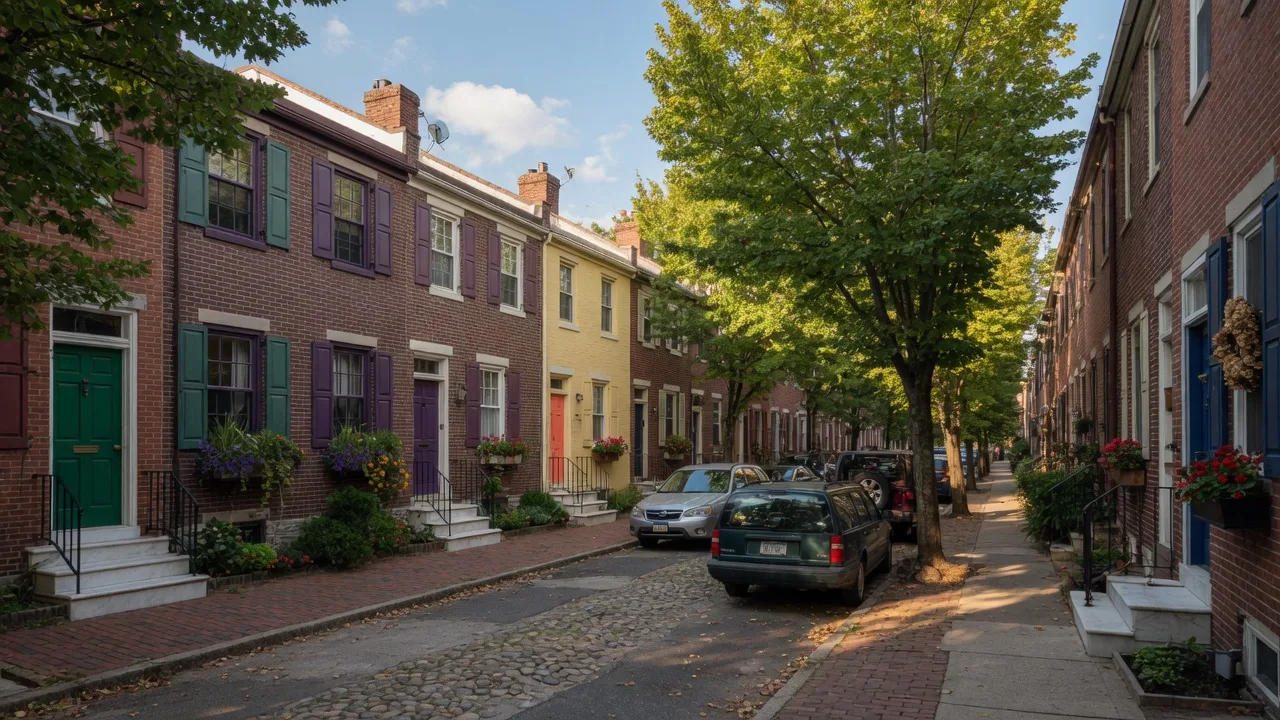
Cedar Park remains one of Philadelphia most attractive markets for buyers seeking historic architecture at accessible prices. The neighborhood popularity with families, university faculty, and creatives continues to drive demand in 2026, while its relative affordability compared to Center City and University City creates ongoing opportunities for first-time buyers and investors.
Market Overview for 2026
Buyer demand in Cedar Park is strong across multiple segments. Families are drawn by Clark Park, Baltimore Avenue walkability, and the strong community association. University faculty and staff from Penn and Drexel appreciate the short commute and neighborhood amenities. First-time homebuyers find the entry price point accessible compared to other Philadelphia neighborhoods. Investors see value in the affordable renovation projects and strong rental demand from students and professionals. Stabilized interest rates in 2026 have encouraged more first-time buyers to enter the market. The neighborhood also attracts buyers priced out of University City and Center City who are seeking similar urban amenities at more affordable prices. Overall, Cedar Park offers a compelling combination of community, convenience, and value.
Price Trends and Range
Victorian rowhome prices range from $200,000 for fixer-uppers requiring significant renovation to $500,000 for fully renovated homes with modern kitchens, baths, and updated systems. Annual appreciation has been approximately 4 to 6 percent over the past few years, outpacing citywide averages as the neighborhood gains popularity. The relatively low entry point compared to Center City makes Cedar Park attractive for first-time buyers and investors. Renovated homes command a significant premium over unrenovated properties, reflecting the high demand for move-in ready homes. Homes with off-street parking or garage access also command a premium. Compared to University City, where similar homes can cost $100,000 to $200,000 more, Cedar Park offers better value for buyers willing to invest in renovation.
Inventory and Demand Analysis
Inventory levels in Cedar Park are moderate, with steady turnover as residents move within the neighborhood or relocate for work. Well-priced, move-in ready homes often sell within 30 to 45 days, sometimes receiving multiple offers. Homes that need renovation may take 60 to 90 days but attract investors and DIY buyers looking for equity opportunities through sweat equity. The neighborhood does not have the extreme inventory constriction of Center City, giving buyers more options and more time for due diligence. The most sought-after properties are renovated homes on quiet, tree-lined blocks near Clark Park and Baltimore Avenue. Fixer-uppers on these same blocks also attract strong interest from buyers planning renovations.
Buyer Profile and Demographics
Cedar Park attracts a diverse mix of buyers. The largest segment is families, drawn by the neighborhood family-friendly atmosphere, Clark Park, and strong community. A significant portion are university-affiliated buyers, including faculty, staff, and graduate students from Penn and Drexel. First-time homebuyers find the affordable entry points attractive, often using FHA loans or PHFA assistance programs. Investors purchase fixer-uppers for renovation, capitalizing on the growing demand for renovated homes in the neighborhood. Empty-nesters from other parts of the city sometimes downsize to Cedar Park for its community feel and walkable amenities. The neighborhood diversity of buyers contributes to a stable, growing market that has shown resilience through various economic conditions.
Investment Outlook
Cedar Park offers strong investment potential for several reasons. Proximity to Penn and Drexel ensures steady rental demand from students and professionals. The affordable purchase prices allow for attractive returns on renovation investments. The neighborhood improving amenities, including the Baltimore Avenue corridor and Clark Park, support continued appreciation. Rental properties in Cedar Park typically generate positive cash flow with renovation, and the expanding University City employment base provides a growing pool of potential tenants. For owner-occupants, the combination of affordable purchase prices and the ability to build equity through renovation makes Cedar Park one of Philadelphia best neighborhoods for building long-term wealth through homeownership.
2026 Forecast and Predictions
Cedar Park is expected to continue its trajectory as one of Philadelphia most desirable affordable neighborhoods. Continued development along Baltimore Avenue, the enduring popularity of Clark Park as a community anchor, and the neighborhood proximity to major universities support positive long-term fundamentals. Price appreciation of 3 to 5 percent annually is projected through 2027, assuming stable interest rate conditions. The most significant risk is a broader economic downturn affecting the Philadelphia housing market, but Cedar Park affordability and strong demand fundamentals make it more resilient than higher-priced neighborhoods. For personalized advice on buying or selling in Cedar Park, schedule a consultation with John Smart.
Common Questions
How is the Cedar Park real estate market in 2026?
Strong demand from families and university-affiliated buyers, with affordable prices and good appreciation potential.
What is the price range in Cedar Park?
$200,000 to $500,000 for Victorian rowhomes, offering excellent value for historic architecture.
Is Cedar Park a good real estate investment for 2026?
Yes, with strong fundamentals including proximity to universities, a vibrant community, and affordable prices.
How fast do homes sell in Cedar Park?
Renovated homes sell within 30 to 45 days. Fixer-uppers may take 60 to 90 days.
What is the annual appreciation rate in Cedar Park?
Approximately 4 to 6 percent annually, outpacing citywide averages.
What types of buyers are attracted to Cedar Park?
Families, university faculty, first-time buyers, and investors seeking value in historic architecture.