Key Takeaways
- +Sinking Spring blends established borough neighborhoods with newer construction along the US-422 corridor, and the Wilson School District keeps family demand steady.
- +Compared with higher-priced Main Line and eastern markets, Sinking Spring offers more attainable values, drawing first-time and move-up buyers.
- +Updated and newer homes sell steadily; buyers should be pre-approved and ready to move on the right property.
- +Market conditions vary by street and price band, so a personalized analysis beats any regional average.
Sinking Spring, the family-friendly borough about five miles west of Reading, has quietly become one of the more interesting real estate stories in Berks County. This 2026 market update gives an honest, current look at how the local market is behaving: inventory, buyer demand, the role of the Wilson School District, and what it means whether you are buying, selling, or simply keeping an eye on values.
The short version is that Sinking Spring offers steady, family-driven demand at a more attainable price point than the premium Main Line towns to the east. The Wilson School District anchors that demand, and the borough's location on US-422 with US-222 a short drive away makes it a practical base for commuters who work in Reading, along the Route 422 corridor, or toward the Philadelphia region. This update was last reviewed in August 2026.
Where Sinking Spring Sits in the Market
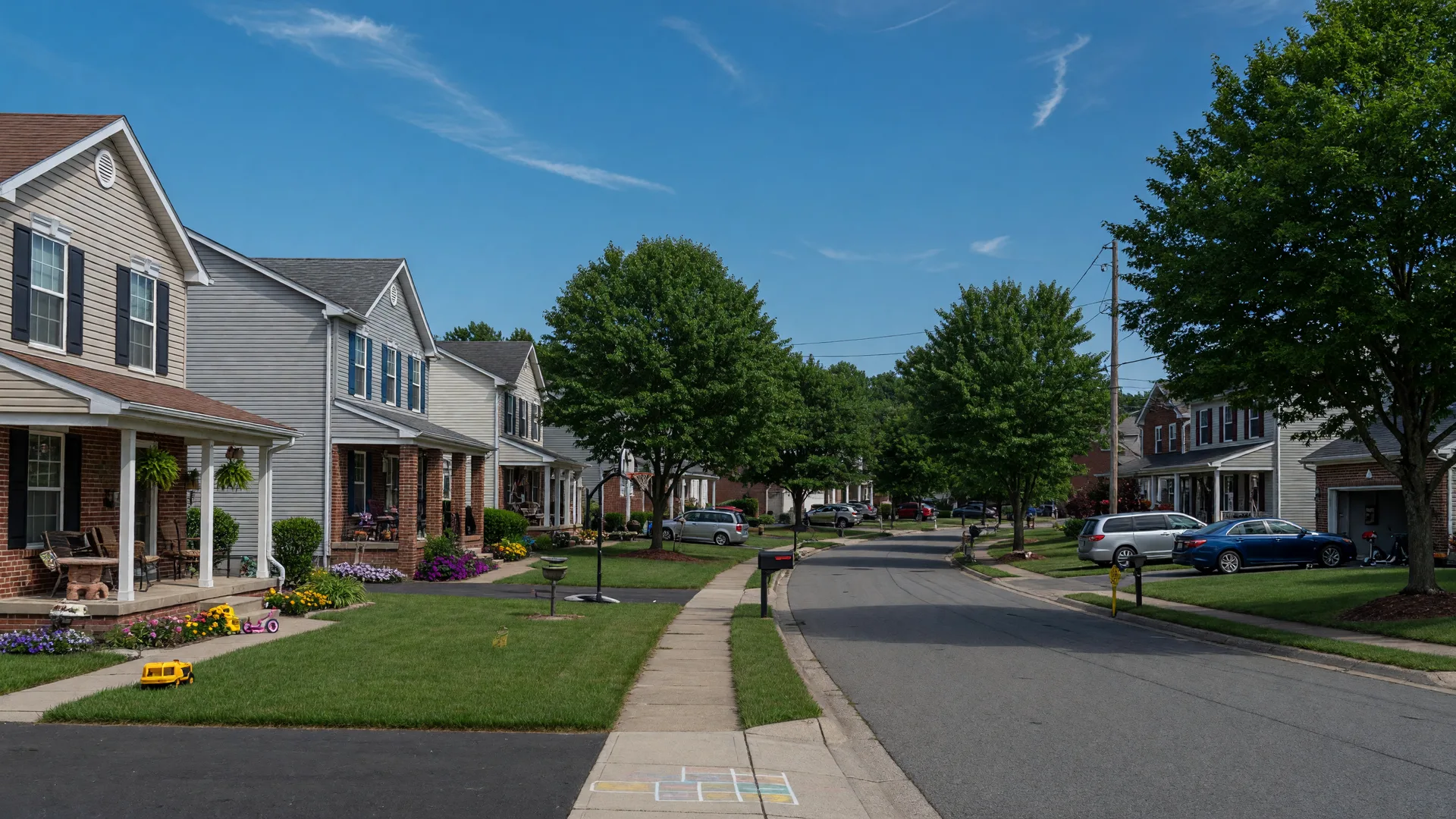
Sinking Spring is a borough of roughly 4,300 residents, incorporated in 1913 and named for the limestone spring that periodically vanishes underground near the center of town. Its housing stock is part of the appeal: the original borough offers older bungalows, colonials, and attic-and-porch classics along walkable, tree-lined streets, while newer neighborhoods on the edges, especially around Green Valley Road, Shiloh Hills, and the Spring Township line, add modern two-story homes with brick accents, open layouts, and attached garages.
That mix gives Sinking Spring something many Berks communities lack: options. A young family can buy a starter home in the borough, a move-up buyer can find a newer build minutes away, and a downsizer can land in a well-maintained single-level property near downtown conveniences. Alongside neighboring Wyomissing, the area is among the most in-demand in Berks County, but Sinking Spring generally delivers more space and newer construction for the money, which is a big part of its 2026 story.
Inventory in the borough itself is typically modest. Sinking Spring does not see the constant turnover of larger developments, so when a solid home does hit the market, qualified buyers tend to act fast. The newer neighborhoods see more frequent activity, with several small developments adding fresh inventory through the year.
What Is Driving Demand
The single strongest driver is the Wilson School District. With eight schools spanning Cornwall Terrace, Green Valley, and Shiloh Hills elementary in Sinking Spring itself, Wilson Southern and Wilson West middle schools, and the district's sole high school, Wilson High in nearby West Lawn, the district serves the borough and its neighbors directly. U.S. News & World Report recognizes Wilson High among Pennsylvania's top high schools, and that reputation pulls in families every year.
Commute is the second engine. US-422 runs straight through town, Reading is minutes east, and US-222 links the borough toward Lancaster and the Turnpike region. For workers in Reading, the Route 422 employment corridor, or even Philadelphia-region employers, Sinking Spring sits at a practical midpoint: a small-town home base with a realistic drive to bigger job centers.
The borough's own character supports the market too. A walkable downtown along Penn Avenue, neighborhood parks, low-crime streets, and community events make it an easy place to picture raising a family, and that emotional pull translates directly into buyer competition when homes list.
5 mi
West of Reading on US-422
8
Wilson School District Schools
What Buyers Should Know
If you are shopping in Sinking Spring, the big decision is usually old borough charm versus newer construction. Original-borough homes often deliver character, mature trees, and walk-to-downtown convenience, but they may need updating. Newer neighborhoods offer move-in-ready finishes and energy-efficient systems, usually with a commute that still keeps the school, shops, and parks close.
- Get pre-approved before you tour. The right home, especially in the newer developments, can draw multiple offers within the first week.
- Decide on your school preference early. All Wilson district students feed the same high school, but elementary choices differ by neighborhood address.
- Watch for updates: kitchens, bathrooms, HVAC, and roofing drive the most value in older homes.
- If you are new to the market, the first-time buyer program page walks through the process, and the mortgage calculator helps you model a budget you can act on.
Need a place to start searching? Use the find a home tool to filter newer construction, borough classics, and everything in between.
What Sellers Should Know
Sinking Spring sellers benefit from the same forces that help buyers: steady demand, low turnover, and a respected school district. Well-priced, well-presented homes tend to sell briskly, and newer or newly updated properties often attract strong attention from both local buyers and people relocating from more expensive eastern markets.
That does not mean every listing sells itself. Condition and honest pricing still matter, and the borough's dual personality means you need the right positioning: a charming but dated bungalow markets differently than a turn-key new build. Start with a free home value estimate, and review the compare your selling options guide to see which route fits your timeline and situation.
The 2026 Outlook
Expect Sinking Spring's market to stay steady and family-driven through the rest of 2026. Demand from the Wilson School District is not going anywhere, newer construction continues to add fresh inventory, and the borough's value proposition relative to eastern Pennsylvania markets remains strong. This is not a flashy market, and that is the point: it is a dependable one, built on schools, safety, and a genuinely pleasant small-town life.
Because conditions vary from street to street and price band to price band, no article can replace a personalized look at your situation. To get current numbers for a specific street or for your own home, reach out to Smarty for a tailored market analysis of Sinking Spring or anywhere in Berks County.
Common Questions About the Sinking Spring Market
Is Sinking Spring a buyer's market or a seller's market?
Sinking Spring has leaned slightly seller-favorable through 2026, with modest inventory and consistent family demand, especially for newer and updated homes. Solid properties attract competing offers, while dated homes in need of work give patient buyers room to negotiate.
Why are homes in Sinking Spring in such high demand?
The Wilson School District is the anchor, backed by low crime, a walkable small downtown, nearby parks like Cacoosing Meadows and Blue Marsh Lake, and a commute setup along US-422 and US-222 that works for Reading and Philadelphia-area workers.
How does Sinking Spring compare with Wyomissing?
Wyomissing, Berks County's premier borough with its top-ranked district and upscale stock, generally commands premium pricing. Sinking Spring offers the same county, strong schools, and easy corridor access at a more attainable value, with a larger share of newer construction and family-sized lots.
Is Sinking Spring a good commuter location?
Yes. US-422 runs through the borough to Reading, US-222 is minutes away, and the corridor east reaches the King of Prussia and Philadelphia region. Many residents also work locally in Reading and along the Route 422 employment belt. See our walkability, safety, and daily life guide for the full commuter picture.
