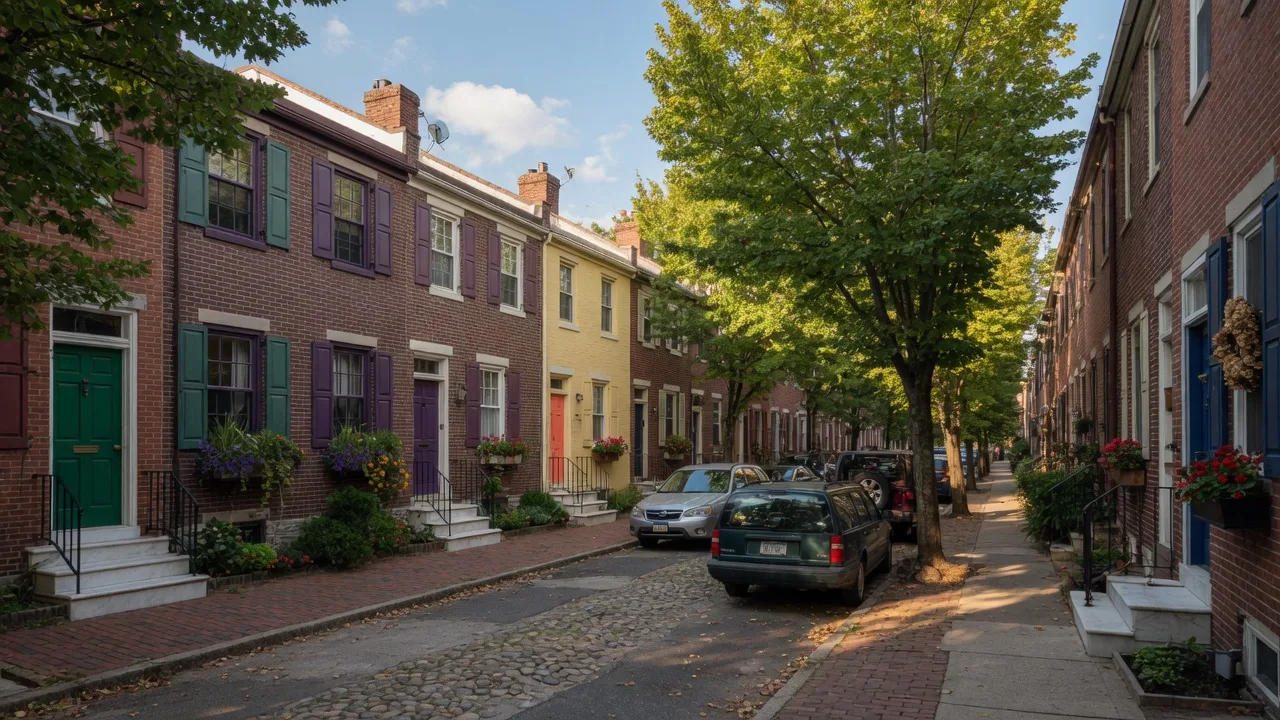
Bella Vista is one of Philadelphia's most beloved South Philadelphia neighborhoods, named for its "beautiful view" over the city. Known for the historic Italian Market, an incredible dining scene, and beautiful historic rowhomes, Bella Vista offers a unique blend of old-world charm and modern urban living. Here is an honest look at the pros and cons of living in this vibrant neighborhood, drawing on local expertise and firsthand knowledge of the community.
Key Takeaways
- +Home to the historic Italian Market, America's oldest continuously operating outdoor market, offering incredible fresh produce, meats, and specialty foods.
- +Beautiful historic rowhomes with Italianate architecture on tree-lined streets at more affordable prices than Center City.
- +Excellent walkability and transit access, though street parking is very limited and can be challenging.
- +Strong sense of community with active civic associations, festivals, and year-round cultural events.
Historic Charm and Architecture
Bella Vista's housing stock consists primarily of historic brick rowhomes built between 1880 and 1920, many with distinctive Italianate features like ornate cornices, marble steps, and wrought-iron railings. The neighborhood was originally settled by Italian immigrants, and that heritage is still visible in the architecture, the Italian Market, and the many Italian social clubs and restaurants that dot the area. The Stella Maris Church at 10th and Reed is a neighborhood landmark, and the area around the Italian Market preserves the feel of a traditional Italian-American community. Many homes have been lovingly restored, blending original details like exposed brick and hardwood floors with modern updates. For architecture enthusiasts, Bella Vista offers an extraordinary concentration of late-19th and early-20th century residential design that is increasingly rare in American cities. The neighborhood's designation has helped preserve these architectural treasures while allowing sensitive modern renovations that bring historic homes up to contemporary living standards.
The downside of this historic housing stock is that many homes come with the challenges of older construction: aging mechanical systems, lead paint considerations, and layouts that may not suit modern preferences for open floor plans. Renovating a Bella Vista rowhome can be a rewarding project but requires careful budgeting and familiarity with Philadelphia's building codes and permit requirements. A thorough home inspection is essential before purchasing any older property in the neighborhood.
Italian Market and Dining
The Italian Market on 9th Street is the heart and soul of Bella Vista. As America's oldest continuously operating outdoor market, it offers an incredible array of fresh produce, meats, cheeses, olive oils, pastas, and imported Italian specialties. Iconic vendors include DiBruno Bros., Claudio's Specialty Foods, Anastasi Seafood, and Termini Bros. Bakery. Beyond the market, Bella Vista boasts an exceptional dining scene with options ranging from classic red-sauce Italian joints to trendy farm-to-table restaurants. Little Nonna's, Le Virtu, and Barkley's Crab Cakes are local favorites. The neighborhood's food culture is one of its strongest selling points, with new restaurants and cafes regularly opening to meet demand from the growing residential population. The Singing Fountain at 9th and Christian is a beloved local landmark and gathering spot where neighbors meet and children play.
Walkability and Transit
Bella Vista has a Walk Score in the mid-90s, making daily errands and dining easily walkable. The neighborhood is served by the Broad Street Line subway at Tasker-Morris and Snyder stations, and multiple SEPTA bus routes. The Italian Market, South Street, and the Sports Complex are all easily accessible without a car. Many residents find they barely need a vehicle for daily life. Bike lanes on several neighborhood streets and Indego bike-share stations provide additional transportation options. The neighborhood's flat terrain and gridded street layout make it particularly accessible for pedestrians of all ages and mobility levels. For detailed transportation information, see our Bella Vista Walkability and Safety guide.
Parking and Noise
Street parking is very limited in Bella Vista, as in most of South Philadelphia. Residents often rely on paid parking lots or choose to live car-free. Permit parking zones help but do not guarantee a spot, and finding parking after 6 PM on weeknights can be particularly frustrating. Monthly parking in a garage typically costs $200-$400. The neighborhood is generally quiet on residential streets, but areas near the Italian Market and major thoroughfares like 9th Street and Washington Avenue can experience more noise during market hours and on weekends. The Italian Market Festival in May brings additional activity and street closures. For those accustomed to suburban quiet, the ambient urban noise of sirens, trash collection, and foot traffic may take some adjustment.
Real Estate and Investment
Bella Vista offers excellent value compared to Center City neighborhoods. Home prices range from approximately $350,000 for fixer-uppers to $800,000+ for fully renovated properties. The neighborhood's popularity with families and professionals supports steady demand and price appreciation. Renovated homes with modern kitchens, updated baths, and efficient HVAC systems command premium prices. The real estate market in Bella Vista has shown remarkable resilience, with steady appreciation of 3-5% annually over the past several years. For current market data, see our Bella Vista Market Update 2026. For guidance on buying or selling, visit our buying and selling guide.
Community and Events
Bella Vista has an exceptionally strong community fabric. The Bella Vista Citizens Association is an active civic organization that advocates for neighborhood improvements and organizes community events. The Italian Market Festival each May is a highlight, drawing thousands with food tastings, cooking demonstrations, and live music. The neighborhood's strong Italian heritage is celebrated through various cultural events, and the many Italian social clubs and organizations contribute to a tight-knit community feel. Weekly farmers markets, block parties, and neighborhood clean-up days provide regular opportunities for residents to connect. The South Street Headhouse District hosts seasonal events including the Shambles farmers market and holiday celebrations that bring the broader community together.
Schools and Family Life
Bella Vista is increasingly popular with families raising children. The neighborhood offers access to several good public schools including Andrew Jackson School (K-8) and George W. Nebinger School (K-8). For high school, students can apply to citywide magnet schools like J.R. Masterman and Central High School. Several parochial schools serve the neighborhood's Catholic heritage, and the area is within reach of prestigious private schools in Center City. Palumbo Recreation Center provides playgrounds, sports programs, and after-school activities. For more on this topic, see our Bella Vista Schools and Parks guide.
Common Questions
Is Bella Vista family-friendly?
Yes, Bella Vista is one of Philadelphia's most family-friendly South Philly neighborhoods, with good schools, parks, and strong community.
What is the difference between Bella Vista and Queen Village?
Both are historic South Philly neighborhoods with rowhomes and markets. Bella Vista is known for its Italian heritage and Market, while Queen Village centers on South Street and has more colonial-era history.
How expensive is Bella Vista compared to Center City?
Bella Vista is generally more affordable than Center City neighborhoods like Rittenhouse and Fitler Square while offering similar urban amenities.
What is the Italian Market Festival?
The annual Italian Market Festival in May features food tastings, cooking demonstrations, live music, and cultural celebrations that draw thousands of visitors.
Can I live in Bella Vista without a car?
Yes, many Bella Vista residents live car-free thanks to excellent walkability, subway and bus access, and the concentration of daily amenities within walking distance.
Explore More
External Resources
