Table of Contents
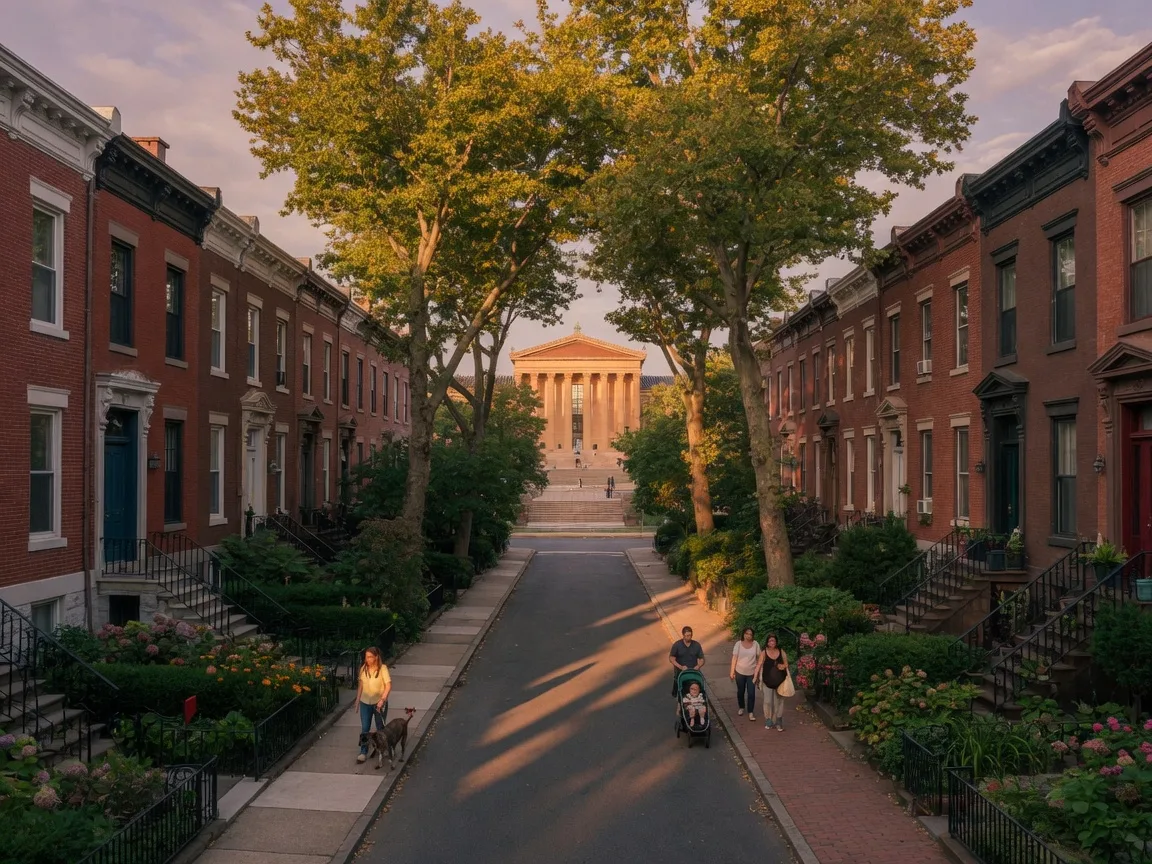
Fairmount is one of Philadelphia's most desirable neighborhoods, prized for its historic brownstones, walkability, and location next to Fairmount Park and the Philadelphia Museum of Art. But no neighborhood is perfect. This guide gives you an honest, balanced look at the pros and cons of living in Fairmount so you can decide if this iconic Philadelphia neighborhood is the right fit for you and your family.
Key Takeaways
- +Fairmount offers exceptional walkability (Walk Score 94), direct access to Fairmount Park, and a 10-minute walk to Center City, making it one of Philadelphia's most convenient neighborhoods.
- +Home prices are higher than most Philadelphia neighborhoods, with historic brownstones typically ranging from $500K to over $1M, reflecting the neighborhood's premium location and limited housing supply.
- +Public school options within the immediate neighborhood are limited to Bache-Martin Elementary (K-8), though many families choose private schools or apply to citywide admission high schools.
- +Parking is a significant challenge in Fairmount, with limited street parking and premium prices for garage spaces, which is a common trade-off for the neighborhood's walkability.
The Pros: Why People Love Fairmount
Exceptional Walkability. Fairmount routinely earns a Walk Score of 94 from Walkscore.com, meaning most daily errands can be accomplished on foot. Fairmount Avenue is lined with restaurants, cafes, shops, and services within a few blocks. The Philadelphia Museum of Art, Fairmount Park, and Center City are all within a 10 to 15-minute walk. For those who prefer not to drive, Fairmount is one of Philadelphia's most pedestrian-friendly neighborhoods.
World-Class Cultural Access. Living in Fairmount means having the Philadelphia Museum of Art, the Rodin Museum, the Barnes Foundation, the Academy of Natural Sciences, and Eastern State Penitentiary all within walking distance. The Kimmel Center, the Academy of Music, and the Avenue of the Arts are a short walk or quick transit ride away. This concentration of cultural institutions is unmatched by any other residential neighborhood in the city.
Fairmount Park at Your Doorstep. Over 2,000 acres of public parkland, including the Schuylkill River Trail, Boathouse Row, the Philadelphia Zoo, and miles of wooded hiking trails, are immediately accessible from Fairmount. The park offers running paths, cycling routes, tennis courts, sports fields, playgrounds, and the peaceful Lemon Hill and Belmont Plateau overlooks with panoramic views of the city skyline.
Beautiful Historic Housing Stock. Fairmount is known for its well-preserved 19th-century brick rowhomes and brownstones, many with original architectural details such as marble steps, stained glass transoms, carved woodwork, and wrought-iron fences. These homes offer a level of character and craftsmanship that is difficult to find in newer construction. Many have been lovingly renovated with modern kitchens, open floor plans, and private rear gardens or roof decks.
Strong Community Identity. Despite its prime location, Fairmount maintains a genuine neighborhood feel. The Fairmount Civic Association, the Fairmount Community Development Corporation, and active neighborhood watch programs keep residents connected. Annual events like the Fairmount Fall Festival, Porchfest, and neighborhood block parties build lasting community bonds. Neighbors know each other, local businesses greet regulars by name, and the community rallies around local causes and improvements.
Short Commute to Center City. Fairmount is one of the few Philadelphia neighborhoods where you can walk to work in Center City in under 15 minutes. For those who work in University City, the walk across the Market Street Bridge is about 20 minutes. The SEPTA Route 7 bus and the Broad Street Subway (via the Fairmount Avenue bus connection) provide quick transit options for rainy days or when you need to go a bit farther.
The Cons: Challenges to Consider
High Cost of Living. Fairmount is one of Philadelphia's most expensive neighborhoods. Historic brownstones in prime locations routinely sell for $500,000 to over $1 million. Condos in the Art Museum area range from $300,000 to $600,000. Rental prices for one-bedroom apartments average $1,500 to $2,200 per month. Property taxes on higher-value homes can also be substantial, especially after the city's Actual Value Initiative reassessment. For buyers on a tighter budget, neighborhoods like Brewerytown, Francisville, or Strawberry Mansion may offer more affordable entry points while still being close to Fairmount.
Limited Parking. Parking is one of the most persistent complaints from Fairmount residents. Street parking is competitive, especially on evenings and weekends when visitors come for Art Museum events or Fairmount Avenue dining. Many homes do not have off-street parking, and garage spaces in the neighborhood can cost $200 to $400 per month. Residential parking permits help, but do not guarantee a spot. For car-dependent households, this can be a daily frustration. The trade-off is that the neighborhood's excellent walkability and transit access reduce the need for a car for many residents.
Limited Public School Options. The immediate neighborhood is served by Bache-Martin Elementary School, a K-8 public school that has strong community support but whose academic ratings vary. For high school, students attend Benjamin Franklin High School or must apply to Philadelphia's selective admission and citywide schools such as Central High School, Masterman, or Girard Academic Music Program. Many Fairmount families choose private or parochial schools, which adds a significant expense to the cost of raising children in the neighborhood.
Tourist Density. Fairmount's location next to the Philadelphia Museum of Art, Eastern State Penitentiary, and Fairmount Park means the neighborhood can feel crowded during peak tourist season and on weekends. The Rocky Steps draw thousands of visitors daily, and Uber/Lyft traffic on Fairmount Avenue and Kelly Drive can be heavy. Residents near the Art Museum face crowds, noise, and occasional street closures for events and film shoots. This is the price of living in one of the city's most visited destinations.
Aging Housing Stock Needs Maintenance. While Fairmount's historic homes are beautiful, they also come with the maintenance challenges of older construction. Many of the neighborhood's rowhomes and brownstones were built in the 1850s to 1920s and require ongoing upkeep: roof repairs, plumbing updates, electrical system modernization, and window replacement. Lead paint and knob-and-tube wiring are concerns in unrestored properties. Buyers should budget $20,000 to $50,000 for renovations and ongoing maintenance on an older home, even after a professional inspection.
Fairmount Real Estate Market
Fairmount's real estate market in 2026 remains strong, driven by limited inventory and consistent demand from buyers who value walkability, culture, and historic character. The neighborhood's housing stock is dominated by 19th-century brick rowhomes and brownstones, with a growing number of condo developments near the Art Museum and along the Benjamin Franklin Parkway.
Historic Brownstones and Rowhomes in Fairmount typically range from $500,000 to over $1 million, with prices driven by location, square footage, renovation quality, and outdoor space. Homes on tree-lined blocks with private gardens or roof decks command premium prices. The most desirable sections are between Fairmount Avenue and the park, and between 22nd and 25th Streets.
Condos in the Art Museum Area offer a more affordable entry point into the neighborhood, with one-bedroom units starting around $250,000 and two-bedroom units ranging from $350,000 to $600,000. Newer construction condos with amenity packages (fitness centers, doorman, parking) command higher prices but offer modern convenience and lower maintenance requirements than historic homes.
Market trends in 2026 show continued price appreciation of 3% to 5% year over year, with well-priced homes typically selling within 30 to 45 days. The limited supply of historic homes, combined with strong demand from both local buyers and out-of-state relocations, supports the market's stability. For a detailed analysis of current pricing and trends, see the Fairmount Real Estate Market Update 2026.
Schools and Family Life
Fairmount is increasingly popular with families, though the public school options within the immediate neighborhood are limited. Bache-Martin Elementary School (22nd and Brown Streets) serves grades K-8 and has an active parent-teacher association and strong community involvement. The school offers a Spanish immersion program and after-school enrichment activities. For high school, the neighborhood is zoned for Benjamin Franklin High School, though many families apply to Philadelphia's citywide admission high schools including Central High School, Masterman, and the Girard Academic Music Program.
Private school options are plentiful within a short distance. Friends Select School, William Penn Charter School, the Philadelphia Montessori School, and Greene Street Friends School are popular choices among Fairmount families. Several Catholic parochial schools, including St. Francis Xavier School, are within walking distance. The proximity to the University of Pennsylvania and Drexel University also provides educational enrichment opportunities for older students and adults.
Family-friendly features of the neighborhood include multiple playgrounds within Fairmount Park and the neighborhood itself. The Fairmount Park Playground at 33rd and Oxford Streets offers modern equipment, spray grounds, and sports fields. The Smith Memorial Playground in nearby East Fairmount Park is a historic 6.5-acre facility designed specifically for young children, with a 100-year-old wooden playhouse, spinning apparatus, and expansive lawns. The neighborhood's low traffic volume on side streets and strong sense of community safety make it a place where children can walk to school and play outside.
Commuting and Transportation
One of Fairmount's greatest advantages is its transportation connectivity. Walking is the primary mode of transportation for most residents. The 10 to 15-minute walk to Center City, 20-minute walk to University City, and direct access to Fairmount Park make Fairmount one of Philadelphia's most commuter-friendly neighborhoods. The Schuylkill River Trail provides a car-free walking and cycling route to Center City, parking at 30th Street Station, and the University of Pennsylvania campus.
Public Transit. The SEPTA Route 7 bus runs along Fairmount Avenue, connecting to the Broad Street Subway (at Girard Avenue) and 30th Street Station. The Route 32 bus provides service south on 23rd Street to Center City and north through Brewerytown. The Market-Frankford El at 30th Street Station is a 10-minute walk or short bus ride from most parts of Fairmount. Amtrak and SEPTA Regional Rail at 30th Street Station provide connections to New York, Washington, Harrisburg, and the Pennsylvania suburbs.
Driving. While many Fairmount residents own cars, driving is often the least convenient transportation option due to parking challenges. Kelly Drive provides a scenic route north along the river, and I-76 (the Schuylkill Expressway) offers direct highway access to King of Prussia, Valley Forge, and the Pennsylvania Turnpike. For those who do drive, the commute to Center City is about 5 minutes, to University City about 8 minutes, and to King of Prussia about 25 minutes.
Is Fairmount Right for You?
Fairmount is an excellent choice if you value walkability, cultural access, historic architecture, and being close to both nature and a major city center. It is ideal for professionals who work in Center City or University City, empty-nesters downsizing from suburban homes who want urban amenities, and families who prioritize walkability and park access and can navigate the school choice process.
Fairmount may not be the best fit if budget is your primary concern and you need more space per dollar, if you rely heavily on a car and need guaranteed parking, or if you want a large single-family home with a big yard. In those cases, nearby neighborhoods like Brewerytown, Strawberry Mansion, or the suburbs along the Main Line may offer better value.
Ultimately, Fairmount offers a lifestyle that few Philadelphia neighborhoods can match. The combination of world-class culture, the region's largest park, walkable urban amenities, and beautiful historic homes creates a living experience that is both sophisticated and grounded. If those priorities align with yours, Fairmount is well worth considering.
Thinking of Selling Your Fairmount Home?
Get a free, no-obligation home value estimate from John Smart. Find out what your Fairmount home is worth in today's market.
Get Your Home ValueExplore More Fairmount Guides
External Resources

Written by John Smart
AI-Certified Agent™ with eXp Realty | PA License RS348332
Serving Philadelphia, Montgomery, Bucks, Chester, Delaware and Berks Counties