Table of Contents
Germantown is one of Philadelphia's most historic neighborhoods, known for its Revolutionary War heritage, architectural significance, and diverse community. With a Walk Score of 73 and a median home price around $259,000 in 2026, Germantown offers an enticing mix of affordability and character. Here is an honest look at the pros and cons of living in Germantown, from the perspective of an AI-Certified Agent serving Northwest Philadelphia.
Key Takeaways
- +Germantown is rich in history with sites like Cliveden and the Johnson House dating to the Revolutionary War and Underground Railroad eras.
- +Home prices are among the most affordable in Philadelphia for historic properties, with a median around $259,000 in 2026.
- +Walk Score of 73 means Germantown Avenue is very walkable, with SEPTA Regional Rail providing a 20-minute commute to Center City.
- +Many historic homes need updates and maintenance, so budget for renovations when buying in this neighborhood.
Historic Roots and Community Character
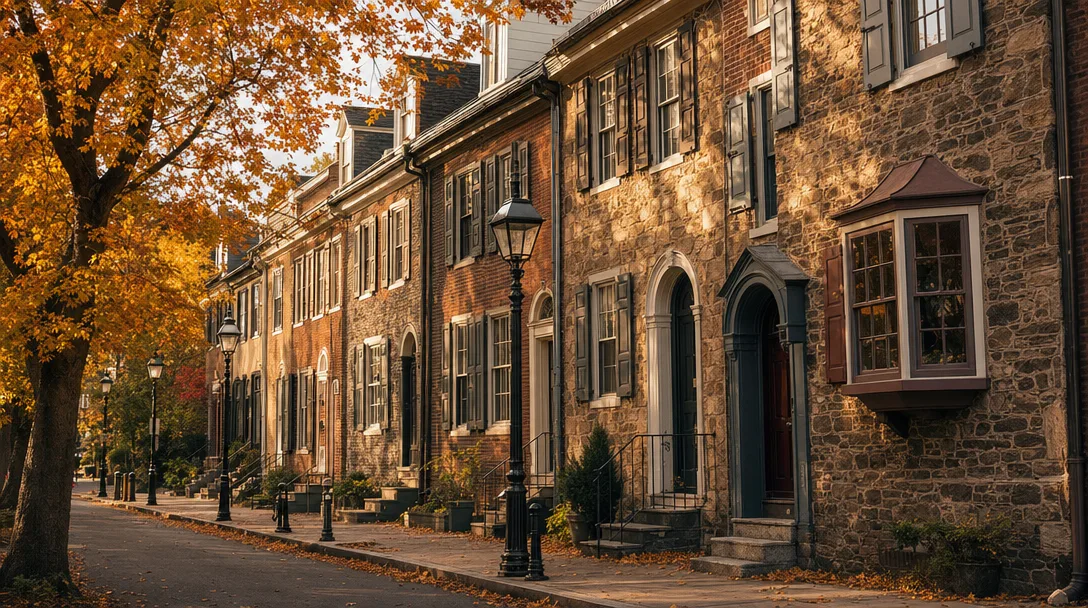
Germantown was founded in 1683 by Palatine German, Quaker, and Mennonite families led by Francis Daniel Pastorius, making it the first German settlement in North America. This deep history is visible on every block. The Colonial Germantown Historic District, a National Historic Landmark spanning 113 acres along Germantown Avenue, contains roughly 580 to 600 historic properties in Colonial, Georgian, and Federal architectural styles. Living here means being surrounded by some of the most significant 18th and 19th century architecture in the United States.
The neighborhood also claims an extraordinary place in American history. The 1688 Germantown Quaker Petition Against Slavery was the first antislavery document in the American colonies. The 1777 Battle of Germantown was the only Revolutionary War battle fought within Philadelphia's boundaries. President George Washington summered at the Germantown White House (Deshler-Morris House) in 1793 and 1794. These layers of history give Germantown a powerful sense of place that you simply will not find in other Philadelphia neighborhoods at these price points.
Pros of Living in Germantown
Rich History and Architecture: Germantown offers an unparalleled concentration of historic homes. The streets are lined with Colonial stone houses, Victorian twins with ornate woodwork, and brick rowhomes. Cliveden, the Johnson House (a stop on the Underground Railroad), and the Germantown White House are within walking distance of each other along Germantown Avenue. The Germantown Historical Society offers walking tours that showcase this architectural heritage.
Affordability: With a median sale price around $259,000 in 2026, Germantown is one of the most affordable historic neighborhoods in Philadelphia. Entry-level buyers can find homes starting under $200,000, and fixer-uppers can be found for even less. This affordability makes Germantown accessible for first-time buyers who want character and space without Center City price tags.
Transit Access: The SEPTA Chestnut Hill East Line serves Germantown Station at East Chelten Avenue and Washington Lane Station, reaching Center City in about 20 to 25 minutes. Multiple bus routes along Germantown Avenue and Chelten Avenue connect to other parts of the city. This transit access is a major advantage for commuters who want affordable home prices with a reasonable downtown commute.
Community Identity: Germantown has strong neighborhood organizations, active civic associations, and a genuine sense of community. The Germantown Community Connection, the Germantown Historical Society, and the Germantown United CDC all work to improve quality of life and preserve the neighborhood's unique character. Vernon Park serves as the community's central gathering space with concerts, festivals, and farmers markets.
Cons to Consider
Home Conditions: Many of Germantown's historic homes are older properties that may need significant updates. Original systems like plumbing, electrical, and HVAC may require replacement. Roofs, foundations, and windows in 200-year-old homes need careful inspection. Buyers should budget for renovations and work with contractors familiar with historic properties. The renovation premium in Germantown is significant, with updated homes selling for 20% to 40% more than comparable fixer-uppers.
Walkability Variation: While Germantown's Walk Score is 73 overall, walkability varies block by block. Germantown Avenue offers walkable access to shops, restaurants, and services, but some residential blocks are farther from daily amenities. Having a car is helpful for many errands, especially grocery shopping and accessing the wider Philadelphia region.
Commercial Density: Germantown's retail and dining scene is less developed than nearby Mt. Airy or Chestnut Hill. While the neighborhood has several good restaurants, markets, and local shops, residents often travel to neighboring areas for more extensive dining and shopping options. The commercial corridor is growing but still has pockets needing investment.
Investment Variability: Investment and development activity varies significantly from block to block. Some sections of Germantown have seen active renovation and rising values, while others have more work to do. Street-by-street research is essential when choosing where to buy, and working with a local agent who understands these micro-markets is critical.
Housing Market and Home Prices
Germantown's housing market in 2026 offers exceptional value for Philadelphia homebuyers. The median sale price is approximately $259,000, according to Redfin data from May 2026. This makes Germantown one of the most affordable neighborhoods in Philadelphia for historic properties. Colonial and Victorian single-family homes in good condition range from $250,000 to $400,000 depending on size, updates, and location. Twin homes and rowhouses offer even more affordable entry points, often priced from $150,000 to $275,000.
Fixer-uppers can be found under $150,000, creating opportunities for investors and handy homeowners willing to put in renovation work. The wide price gap between unrenovated and updated homes creates significant equity-building potential. For buyers who want move-in-ready homes, well-maintained properties in desirable sections closer to Mt. Airy and Chestnut Hill command higher prices but sell faster. Get expert guidance on buying or selling in Germantown for detailed market insights.
Walkability, Transit and Commute
Germantown's Walk Score of 73 out of 100 rates it "Very Walkable," meaning most errands can be accomplished on foot. The Germantown Avenue commercial corridor provides the highest walkability with shops, restaurants, banks, and services concentrated along this historic thoroughfare. For residents living within a few blocks of the Avenue, daily life without a car is achievable, especially when combined with the neighborhood's excellent transit connections.
SEPTA Regional Rail is Germantown's biggest transportation asset. The Chestnut Hill East Line stops at Germantown Station and Washington Lane Station, providing direct service to Center City in 20 to 25 minutes. For commuters, this is a game-changer, combining Germantown's affordable housing with a reasonable downtown commute. Multiple bus routes run along Germantown Avenue and Chelten Avenue, connecting to the Broad Street Line and Market-Frankford El. For cyclists, the nearby Wissahickon Valley Park and Schuylkill River Trail offer recreational riding, though bike commuting infrastructure within the neighborhood is limited.
By car, Center City is 15 to 30 minutes depending on traffic. Germantown Avenue and nearby Roosevelt Boulevard provide access to the regional road network. Parking is generally available, with many homes offering driveways or street parking that is less competitive than Center City or University City. Read more about Germantown walkability and daily life for detailed transit information.
Historic District and Cultural Attractions
Germantown's historic district is one of the most significant in the United States. The Colonial Germantown Historic District was designated a National Historic Landmark in 1965 and added to the National Register of Historic Places in 1966. It spans 113 acres along both sides of Germantown Avenue and contains hundreds of 18th and 19th century buildings. Cliveden (the Benjamin Chew House), built from 1763 to 1767, was the focal point of the October 4, 1777 Battle of Germantown, and its bullet-scarred walls remain visible. The Johnson House, built in 1768, served as a station on the Underground Railroad and tells the story of the abolitionist movement from the perspective of the Quaker Johnson family.
The Germantown White House (Deshler-Morris House) is the oldest surviving presidential residence in the United States, where George Washington stayed during Philadelphia's yellow fever epidemics in 1793 and 1794. Vernon Park, located at Germantown Avenue and Chelten Avenue, hosts a monument to the Battle of Germantown and serves as the neighborhood's central gathering space with concerts, festivals, and seasonal events. Walking tours offered by the Germantown Historical Society connect these historic sites and bring Germantown's story to life. These attractions make Germantown a destination for visitors and a source of daily enrichment for residents.
Who Should Call Germantown Home
Germantown is an excellent fit for several types of homebuyers. First-time buyers looking for affordable historic homes with character find Germantown's entry-level prices appealing. History enthusiasts and preservationists appreciate living surrounded by genuine Colonial and Victorian architecture. Commuters benefit from the SEPTA Regional Rail access that makes a Center City job practical. Investors recognize the upside potential in a neighborhood where the gap between fixer-uppers and renovated homes creates real equity-building opportunities.
Families who value community engagement, parks, and access to both public and private schools (including Germantown Friends School and William Penn Charter School) find Germantown welcoming. The active civic organizations offer newcomers immediate ways to get involved. For anyone seeking an authentic Philadelphia neighborhood with deep roots, architectural character, and accessible prices, Germantown is one of the most compelling options in the city. Get a free home value estimate or start searching for Germantown homes to explore the current market. As your AI-Certified Agent, I can help you navigate Germantown's distinct blocks and find the right property for your needs.
Explore More Germantown Resources
Germantown Community Guide
View moreGermantown Market Update 2026
View moreBuying or Selling in Germantown
View moreGermantown Schools and Parks
View moreGermantown Walkability and Safety
View moreGermantown Dining and Activities
View moreGet Your Home Value
View moreFind a Home in Philadelphia
View moreExternal Resources

Written by John Smart
AI-Certified Agent™ with eXp Realty | PA License RS348332
Serving Philadelphia, Montgomery, Bucks, Chester, Delaware and Berks Counties
Get More Philly Real Estate Insights
Join 5,000+ subscribers getting weekly market updates and neighborhood guides.