Table of Contents
Graduate Hospital is one of Philadelphia's most appealing in-town neighborhoods, offering a unique blend of classic rowhome character, modern development, and incredible walkability. Located just south of Center City between the Schuylkill River and Broad Street, this Southwest Center City neighborhood has become a magnet for professionals, families, and investors alike. With its convenient location, improving amenities, and strong sense of community, Graduate Hospital presents some compelling advantages alongside a few real trade-offs. This guide breaks down the honest pros and cons so you can decide if this is the right Philadelphia neighborhood for you.
Key Takeaways
- +Graduate Hospital offers exceptional walkability with high Walk Scores, easy access to Center City, and strong transit connectivity via SEPTA trolley and bus routes.
- +The neighborhood provides a diverse mix of housing from classic Philadelphia rowhomes to modern condos, with prices that are generally more attainable than Rittenhouse Square or Society Hill.
- +Street parking remains a significant challenge, and some blocks have fewer trees and green spaces than nearby Fitler Square or Spruce Hill.
- +The neighborhood is ideal for buyers who want urban convenience without the premium price tag of Center City's most elite blocks, with strong resale potential and growing demand.
Neighborhood Overview
Graduate Hospital, also known as Southwest Center City, sits just south of Center City Philadelphia, roughly bounded by the Schuylkill River to the west, Broad Street to the east, South Street to the north, and Washington Avenue to the south. The neighborhood got its name from the former Graduate Hospital building (now part of the Penn Medicine system) that operated at 19th and Lombard Streets for over a century.
Over the past fifteen years, Graduate Hospital has transformed from a somewhat overlooked corner of the city into one of Philadelphia's most sought-after residential areas. The combination of its enviable location steps from Center City, the proliferation of new restaurants and cafes along South Street and Baltimore Avenue, and the steady influx of young professionals and families has driven significant real estate appreciation and community investment.
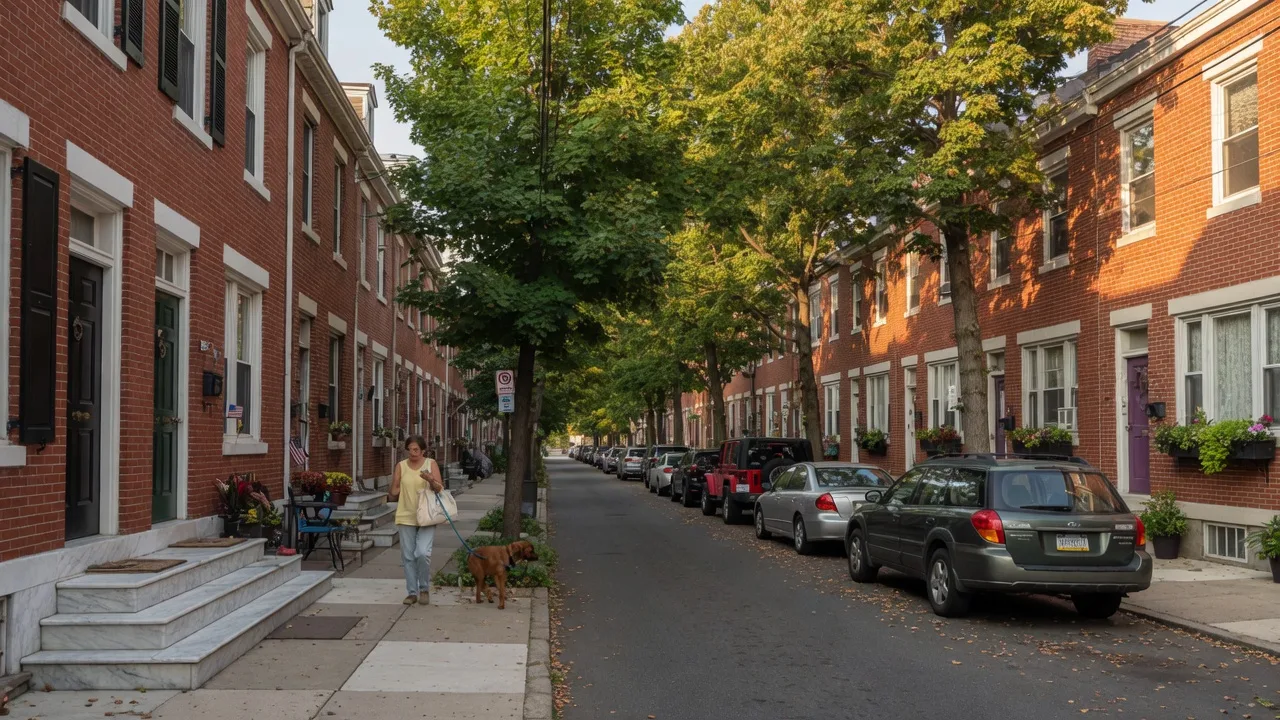
The neighborhood has a distinct residential feel that sets it apart from the busier corridors of Center City. Many blocks are quiet and tree-lined, with classic Philadelphia rowhomes featuring restored marble steps, modern bay windows, and occasional pocket gardens. At the same time, new infill construction has brought contemporary townhouses and condominium buildings that cater to buyers seeking modern finishes in a historic setting. For a deeper look at the area, explore the full Graduate Hospital Community Hub.
The Pros of Living in Graduate Hospital
Exceptional Walkability and Transit Access. Graduate Hospital consistently earns high Walk Scores, often in the mid to upper 90s, meaning most daily errands do not require a car. The neighborhood is walkable to grocery stores like the Graduate Hospital Acme, multiple pharmacies, coffee shops, fitness studios, and dozens of restaurants along South Street, Passyunk Avenue, and Baltimore Avenue. SEPTA trolley routes 11, 13, 34, and 36 run along Baltimore Avenue, providing a direct five-minute ride into the heart of Center City and connections to 30th Street Station and University City.
Strong Real Estate Appreciation and Value. While home prices have risen steadily, Graduate Hospital still offers relative value compared to Rittenhouse Square, Fitler Square, and Society Hill. Buyers can often find more square footage, outdoor space, or a renovated interior for the same price as a smaller condo in Center City's priciest corridors. This has made Graduate Hospital a popular choice for buyers who want proximity to Center City without paying the absolute top-dollar premiums.
Diverse and Growing Dining and Entertainment Scene. The neighborhood's restaurant scene has exploded in recent years. South Street offers everything from BYOB Italian spots to ramen shops, while Baltimore Avenue features a growing corridor of cafes, gastropubs, and bakeries. The proximity to Passyunk Avenue's famous restaurant row in East Passyunk means world-class dining is just a short walk or bike ride away. For a full guide, check out Best Restaurants, Shops, and Things to Do in Graduate Hospital.
Community Feel with Urban Convenience. Graduate Hospital benefits from active civic associations, a neighborhood farmers market, and community events that foster a genuine sense of belonging. The Graduate Hospital Civic Association organizes cleanups, zoning meetings, and social events that bring neighbors together. Fitler Square Park and Schuylkill River Park provide green spaces for relaxation, dog walking, and children's play.
Excellent Access to Parks and the Schuylkill River Trail. The Schuylkill River Park and Trail run along the western edge of the neighborhood, offering a 30-mile paved path for running, cycling, and walking. The park itself features tennis courts, a dog park, a community garden, and open lawns ideal for picnics and pickup sports.
The Cons to Consider
Parking Remains a Major Challenge. Street parking in Graduate Hospital is notoriously difficult, especially during evening hours and weekends. Many older rowhomes do not have off-street parking, and garage spaces in nearby lots typically cost between $150 and $300 per month. Residents who rely on cars for commuting or frequent out-of-town travel should factor this into their decision.
Variable Block-by-Block Character. Because Graduate Hospital is a transitional neighborhood, the feel of the area can change dramatically from one block to the next. Some blocks feature beautifully restored rowhomes with mature trees and manicured gardens, while others have more vacant properties, less greenery, or heavier foot traffic from nearby commercial corridors. It pays to visit at different times of day and walk the specific blocks you are considering.
Limited Yard Space in Many Homes. While some rowhomes have small patios or backyard spaces, many properties offer little to no private outdoor area. Residents seeking a garden, deck, or significant outdoor living space may need to look at newer condos with roof decks or properties on the neighborhood's western edge near the park.
School Options May Require Research. The School District of Philadelphia assigns public schools based on catchment zones. While some nearby schools have improved in recent years, many families choose private, charter, or magnet school options. This is a consideration for parents planning for the long term, though the neighborhood's location does provide access to some of the city's best private schools just a short drive or trolley ride away.
Construction and Development Noise. With Graduate Hospital's popularity has come significant new construction activity. Buyers should be aware of ongoing development projects that may generate construction noise, dust, and street closures, particularly along the South Street corridor and near Washington Avenue.
Cost of Living and Housing
Graduate Hospital's cost of living sits above the Philadelphia average but remains more affordable than Center City's marquee neighborhoods. Home prices vary widely by block, condition, and proximity to transit and commercial corridors. As of mid-2026, the market has seen steady appreciation, with demand consistently outpacing supply in the most desirable sections.
According to data from Redfin and Zillow, Graduate Hospital home values have appreciated approximately 8 to 12 percent over the past year, driven by limited inventory and sustained buyer interest from both local and out-of-state movers. For current pricing trends and inventory levels, our Graduate Hospital Real Estate Market Update 2026 provides detailed neighborhood-by-neighborhood analysis.
Rental rates have also climbed but remain competitive with Center City. A one-bedroom apartment in a newer construction building typically ranges from $1,500 to $2,200 per month, while renovated rowhomes with two or three bedrooms can rent from $2,200 to over $3,500 depending on size and finishes.
Who Should Move to Graduate Hospital
Graduate Hospital is an excellent fit for young professionals who work in Center City or University City and want a walkable commute, families who value urban living with park access and a strong community feel, investors looking for a neighborhood with proven appreciation and rental demand, and empty-nesters downsizing from larger suburban homes who want a vibrant, low-maintenance lifestyle. For a broader perspective on navigation and daily life, read Graduate Hospital Walkability, Safety, and Daily Life.
The neighborhood may be less suitable for buyers who require guaranteed off-street parking, want a large private yard or garden, are on a very tight budget and need the lowest possible entry price, or prefer a quieter, more suburban environment with minimal street activity.
Final Verdict
Graduate Hospital offers one of the best value propositions in Philadelphia real estate. Its combination of walkability, transit access, diverse housing stock, and genuine neighborhood character is hard to beat at its price point. While parking and the block-by-block variability are real considerations, the neighborhood's trajectory is clearly upward, with new restaurants, improved infrastructure, and strong demand driving appreciation.
For buyers who can navigate the parking situation and choose their block carefully, Graduate Hospital provides an urban lifestyle that rivals Center City's most expensive enclaves at a more accessible price. Whether you are buying your first home, upgrading to more space, or investing in Philadelphia real estate, Graduate Hospital deserves a close look.
Ready to Explore Graduate Hospital Real Estate?
Find out what your current home is worth or start your home search in Graduate Hospital today.
Explore More Graduate Hospital Resources
External Resources

Written by John Smart
AI-Certified Agent™ with eXp Realty | PA License RS348332
Serving Philadelphia, Montgomery, Bucks, Chester, Delaware and Berks Counties