Table of Contents
Rittenhouse Square is Philadelphia's most famous and prestigious neighborhood, centered around the iconic 2.16-acre park that bears its name. With a Walk Score above 98, the neighborhood consistently ranks among the most walkable in the entire country, drawing professionals, luxury buyers, and cultural enthusiasts from around the world. But prestige comes with trade-offs, and living in this premier Center City enclave is not for everyone. This guide provides a comprehensive, data-driven look at the pros and cons of living in Rittenhouse Square to help you decide if this is the right place for your next move.
Key Takeaways
- +Rittenhouse Square is Philadelphia's most prestigious address with an iconic park at its center and a Walk Score above 98.
- +The neighborhood offers best-in-class dining, nightlife, and shopping with everything at your doorstep.
- +Real estate prices are among the highest in Philadelphia, with condos from $350K for studios to multi-million dollar park-facing penthouses.
- +Urban noise, tourism crowds, and limited parking are notable drawbacks that potential residents should weigh carefully.
- +The Albert M. Greenfield School serves the neighborhood for K-8, and the area is surrounded by cultural institutions like the Kimmel Center and Curtis Institute of Music.
Overview of Rittenhouse Square
Rittenhouse Square is more than just a neighborhood; it is Philadelphia's most iconic address, a name that carries social cachet and instant recognition among locals and visitors alike. The park at its center, designed by French-born architect Paul Philippe Cret in 1913, is one of William Penn's original five squares laid out in his 1682 city plan. Today it anchors a district defined by luxury high-rises, historic townhomes, and world-class amenities running along Walnut Street, one of the city's premier shopping corridors.
The neighborhood boundaries roughly run from 15th to 21st Streets between Market and Spruce, placing it at the very heart of Center City. With a population of approximately 12,000 residents, Rittenhouse Square draws professionals, luxury buyers, empty nesters, and international investors who want the ultimate urban lifestyle. The area is densely developed, with residential towers, boutique hotels, and elegant pre-war buildings creating a distinctly European streetscape that feels more like Paris than a typical American city center.
Transit connectivity is exceptional. The Market-Frankford Line at 15th Street Station, multiple SEPTA bus routes, and the trolley lines running under Market Street all converge within a five-minute walk of most residences. The Schuylkill River Trail is a 10-minute walk west for runners and cyclists, and the Benjamin Franklin Parkway's cultural corridor with the Philadelphia Museum of Art, the Franklin Institute, and the Barnes Foundation is a pleasant 15-minute walk north. The neighborhood's central location also provides easy access to the 30th Street Station regional rail hub.
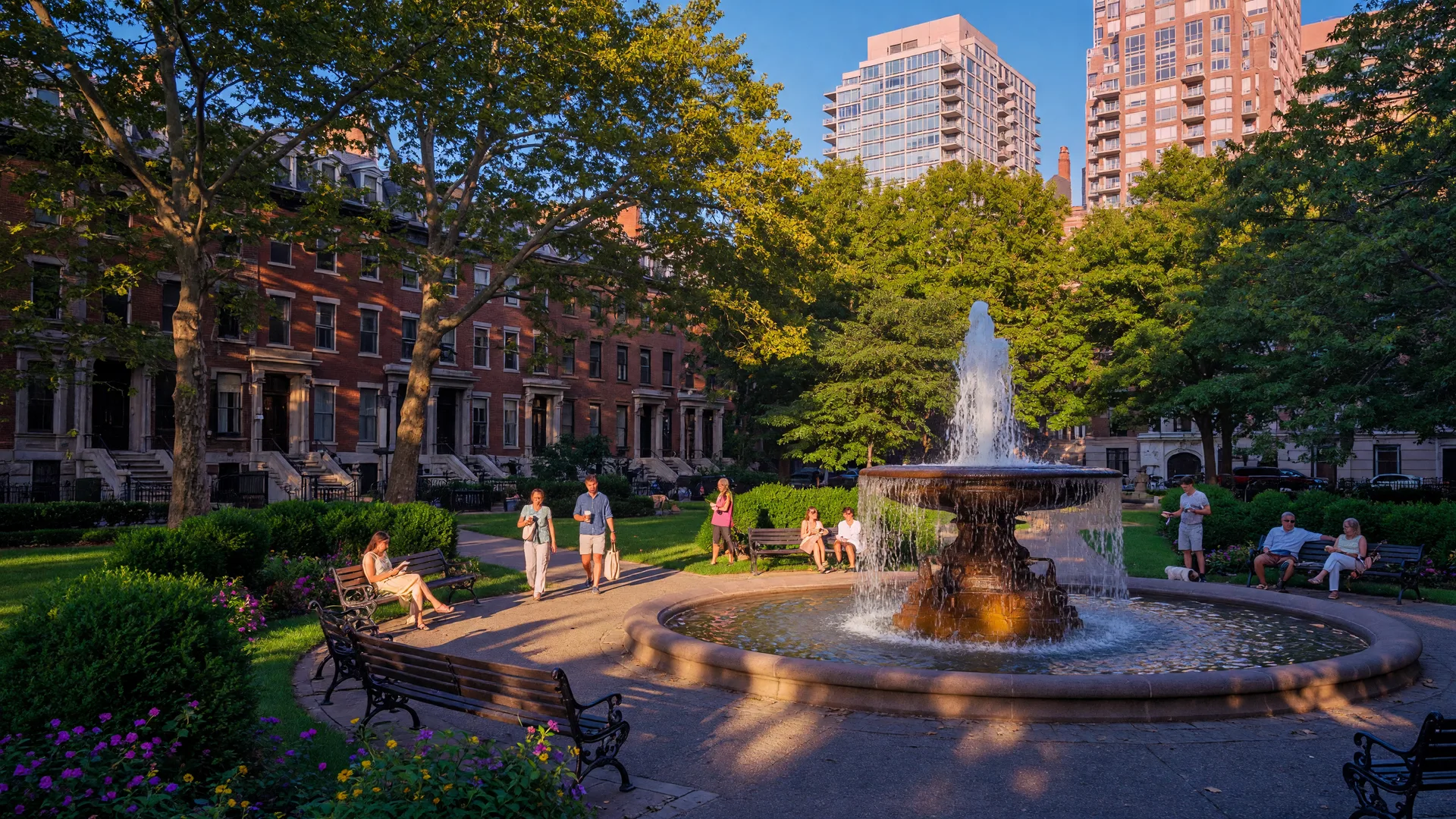
Architecturally, the neighborhood spans from the iconic Art Deco Barclay building at 18th and Rittenhouse to contemporary glass high-rises like the dramatic 10 Rittenhouse Square tower, completed in 2014. Tree-lined side streets like Delancey Place, Panama Street, and Moravian Street offer a quieter residential character with beautifully restored Victorian and Federal-era townhomes. The park itself features shaded walking paths, a central fountain, cast-iron benches, and a dedicated children's play area.
Pros of Living in Rittenhouse Square
The advantages of calling Rittenhouse Square home are substantial and well-documented. For those who value urban living at its finest, this neighborhood delivers an unmatched combination of convenience, culture, and prestige.
- Iconic Park Access: Rittenhouse Square is one of the oldest public parks in the nation and the undisputed heart of Center City. The park hosts art shows, concerts, a weekly farmers market from May through November, and year-round community gatherings. For residents, the park serves as an extended living room, front yard, and community gathering space all in one.
- World-Class Dining and Nightlife: The neighborhood's restaurant scene is arguably the best in Philadelphia. Parc, Barclay Prime, Vernick Food & Drink, Townsend, and Rouge are just a few of the acclaimed establishments that make the area a destination for food lovers.
- Walk Score above 98: The neighborhood ranks among the most walkable in America, with grocery stores, pharmacies, parks, entertainment, and top-tier dining all at your doorstep. Many residents rarely need a car for daily errands.
- Prestige and Investment Stability: A Rittenhouse address carries significant social cachet and has historically been one of the most stable real estate investments in Philadelphia, with strong long-term appreciation.
- Cultural Immersion: Art galleries, theaters, the Kimmel Center for the Performing Arts, the Curtis Institute of Music, and the Wilma Theater are all within walking distance.
- Transit Connectivity: Multiple SEPTA lines, including the Market-Frankford El and Broad Street Line, connect the neighborhood to every corner of the city.
- Green and Blue Spaces: Beyond the central park, the Schuylkill River Trail, Fitler Square playground, and Washington Square are all within a 15-minute walk. Compare Rittenhouse Square to Fitler Square for a family-friendly alternative.
Cons of Living in Rittenhouse Square
Every neighborhood has trade-offs, and Rittenhouse Square's drawbacks are real considerations that any potential resident should weigh carefully before making a commitment.
- Premium Cost of Real Estate: Rittenhouse Square commands the highest real estate prices in Philadelphia by a significant margin. The median home value is well above $700,000, with luxury penthouses reaching into the millions. Monthly HOA fees in luxury condo buildings can add $500 to $1,500 or more.
- Urban Noise Levels: Park events, busy restaurants, bars, and street activity create consistent urban noise, particularly on weekends. Units facing the park or major streets like Walnut can be noticeably loud, especially during summer.
- Parking Challenges: Parking is extremely limited and expensive. Monthly garage parking costs typically range from $350 to $600. Many residential buildings do not include parking.
- Tourism and Crowds: The park draws visitors year-round, with significant foot traffic from tourists, particularly during peak seasons and major events like the Rittenhouse Row Spring Festival.
- Limited Private Outdoor Space: Most residences are condos or apartments without private yards or gardens. The park serves as a communal backyard.
- Higher HOA and Association Fees: Full-service buildings with doormen, pools, fitness centers, and concierge services come with high monthly fees that can add $6,000 to $18,000 annually.
Real Estate and Housing Market
The Rittenhouse Square real estate market is dominated by condos and co-ops in both historic pre-war buildings and modern high-rises. The market spans a wide range of price points, from entry-level studios to multi-million dollar penthouses with panoramic park views. Notable buildings include The Barclay (Art Deco, 1929), The Warwick (converted from a historic hotel), The Dorchester, The Philadelphia, and 10 Rittenhouse Square (the neighborhood's tallest residential tower).
Studio and one-bedroom condos typically start in the high $300,000s to $500,000s, while two-bedroom units range from $600,000 to over $1.5 million depending on condition, views, and building amenities. Penthouses with direct park frontage can command $3 million or more. The rental market is equally robust, with luxury one-bedrooms renting for $2,000 to $3,500 per month.
Property values have shown strong long-term appreciation, driven by the fundamental scarcity of land in this built-out neighborhood and consistent demand. For current data on pricing trends and inventory, visit our Rittenhouse Square Market Update 2026 page or schedule a consultation with John Smart for a personalized market analysis.
Neighborhood Comparison
How does Rittenhouse Square compare to nearby Center City neighborhoods? The most common comparison is between Fitler Square versus Rittenhouse Square. Fitler Square offers a quieter, more residential feel with a family-friendly park, larger playground, and lower prices, while Rittenhouse Square delivers prestige, nightlife, and a more cosmopolitan lifestyle with higher costs.
Compared to Society Hill, Rittenhouse Square is more modern and luxury-focused with high-rise residential towers, while Society Hill offers historic Federal and Georgian architecture with cobblestone streets and a more village-like atmosphere. Washington Square West presents a more affordable, eclectic alternative with a robust restaurant scene and diverse housing stock.
Each neighborhood appeals to different priorities: Rittenhouse Square for prestige and walkability, Fitler Square for family living, Society Hill for historic charm, and Washington Square West for value and energy.
Ready to Make Your Move in Rittenhouse Square?
John Smart provides AI-powered market analysis and personalized guidance for buyers and sellers in Philadelphia's premier neighborhoods.
FAQs About Living in Rittenhouse Square
Is Rittenhouse Square a good place to live?
Rittenhouse Square is an excellent choice for those who value prestige, walkability, and urban energy. It is best suited for professionals, couples, and luxury buyers who can afford premium prices in this premier Center City neighborhood.
How expensive is Rittenhouse Square?
Rittenhouse Square commands the highest real estate prices in Philadelphia, especially for properties facing the park. Condos and luxury apartments dominate the market, with prices ranging from the high six figures for studios to multi-million dollar penthouses. Monthly HOA fees in luxury buildings range from $500 to $1,500.
Is Rittenhouse Square family-friendly?
While some families live in Rittenhouse Square, many prefer the quieter adjacent Fitler Square for its more residential feel and family-oriented community. However, Rittenhouse Square offers the Albert M. Greenfield School (K-8) and proximity to several parks and playgrounds. Read our Fitler Square vs Rittenhouse Square comparison for a family-focused alternative.
How walkable is Rittenhouse Square?
Rittenhouse Square has a Walk Score above 98, making it one of the most walkable neighborhoods in America. Most daily errands, dining, and entertainment are within a few minutes' walk from any address. According to Walk Score, the area is a "Walker's Paradise" where daily errands do not require a car.
What is the parking situation in Rittenhouse Square?
Parking in Rittenhouse Square is extremely limited and expensive. Street parking is scarce, and garage parking can cost $300 to $600 per month. Many residents choose to live car-free, relying on walking, SEPTA, and ride-sharing services.
What schools serve Rittenhouse Square?
The Albert M. Greenfield School (K-8) serves the neighborhood. Private school options nearby include Friends Select School, the Philadelphia School, and J.R. Masterman School, accessible by citywide admission. The neighborhood is also within walking distance of the University of Pennsylvania and Drexel University.
Explore More Rittenhouse Square Resources
Rittenhouse Square Community Guide
View moreComplete Guide to Living in Rittenhouse Square
View moreBuying or Selling in Rittenhouse Square
View moreRittenhouse Square Market Update 2026
View moreBest Restaurants in Rittenhouse Square
View moreFitler Square vs Rittenhouse Square
View moreHome Buying Services
View moreCheck Your Home Value
View moreExternal Resources

Written by John Smart
AI-Certified Agent™ with eXp Realty | PA License RS348332
Serving Philadelphia, Montgomery, Bucks, Chester, Delaware and Berks Counties