Table of Contents
Queen Village offers historic rowhomes on tree-lined streets with a strong sense of community and an unbeatable location near South Street, the Italian Market, and the Delaware River waterfront. The market here is distinct from Center City, with its own dynamics, regulatory considerations, and opportunities for both buyers and sellers.
Key Takeaways
- +Queen Village offers historic 18th and 19th century rowhomes with average values around $593,000, offering better value than Center City neighborhoods.
- +The Neighborhood Conservation District affects exterior renovations -- buyers and sellers should understand the approval process for windows, doors, and facade changes.
- +Limited inventory of move-in ready historic homes and strong demand create a competitive market for well-priced properties.
- +Philadelphia has a 3.28% realty transfer tax split between buyer and seller, which affects total transaction costs.
- +Some areas near the Delaware River are in designated flood zones, so buyers should check FEMA maps and factor in potential flood insurance costs.
The Queen Village Market Overview
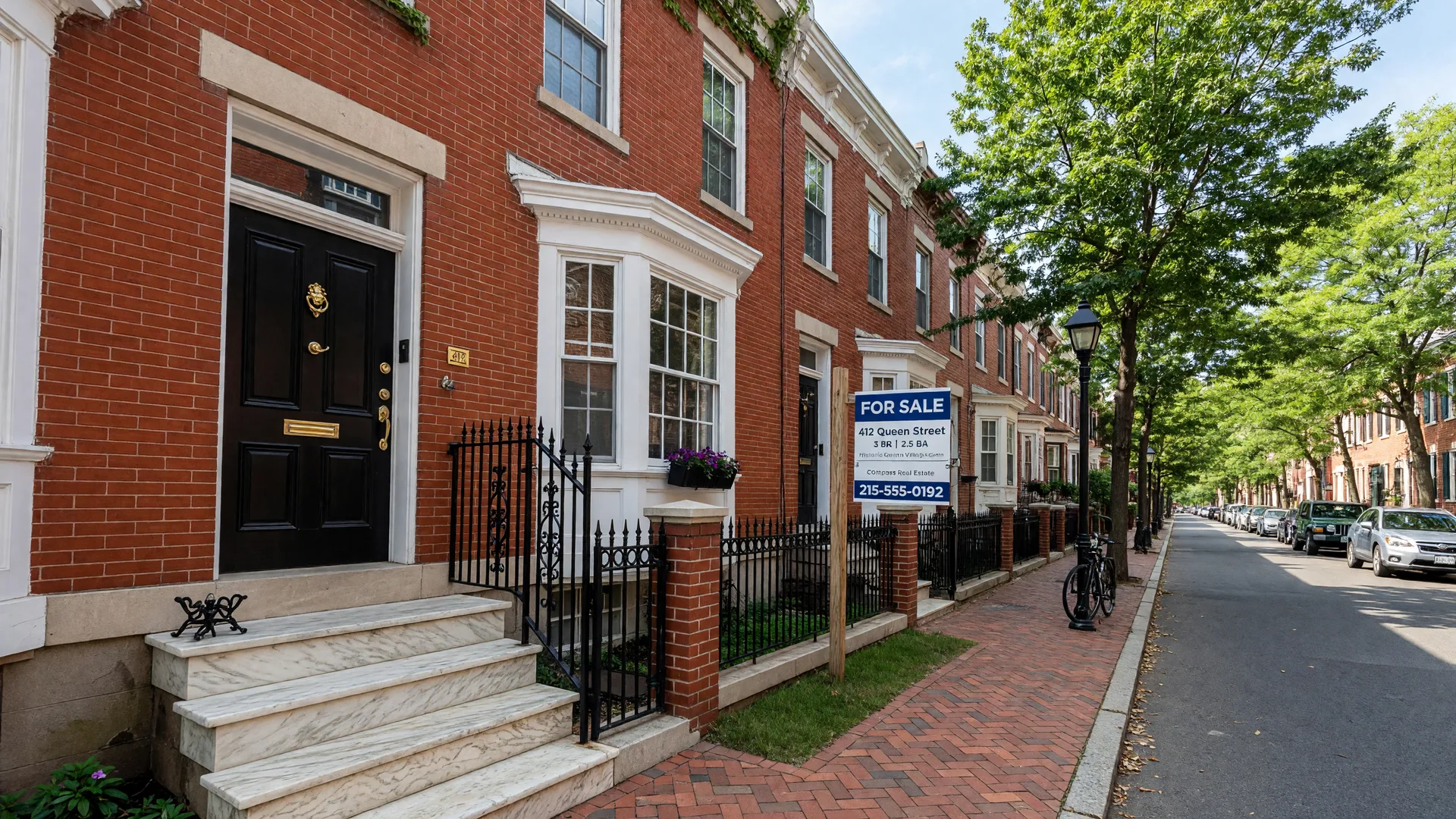
The Queen Village real estate market in 2026 reflects its status as one of Philadelphia's most desirable historic neighborhoods. The housing stock is dominated by three-story rowhomes from the 1860s through the 1920s, with Colonial, Federal, and Italianate architecture. Average home values are approximately $593,000, with median sale prices near $650,000. Prices range from condos starting around $230,000 to larger fully renovated historic homes approaching $2 million.
Inventory is limited. Many homes are held by long-term owners, and new listings attract strong buyer interest, particularly when move-in ready. The neighborhood's appeal -- Walk Score of 93, historic character, dining scene, and community feel -- continues to drive demand from young professionals, families, and empty-nesters alike.
What Buyers Need to Know
If you are buying in Queen Village, here are the key factors to consider:
- Get Pre-Approved First: Strong demand and limited inventory mean well-priced homes sell quickly. A pre-approval letter shows sellers you are serious and ready to close.
- Budget for Renovation: Even well-maintained historic homes over 100 years old may need updates to plumbing, electrical, HVAC, or roofing. A home inspection with a specialist experienced in historic properties is essential.
- Understand the Conservation District: Queen Village was Philadelphia's first Neighborhood Conservation District. Exterior changes, including window replacements, door changes, and facade modifications, may require approval from the Queen Village Neighbors Association. This preserves the neighborhood's character but adds a layer of process to renovations.
- Check Flood Zone Status: Properties near the Delaware River may be in designated flood zones. Check FEMA flood maps and factor in potential flood insurance costs ($500 to $2,000 annually).
- Parking Reality: Most homes do not have off-street parking. Street parking permits are available but spaces are scarce. If parking is essential, prioritize properties with a garage or driveway.
- Work with a Local Expert: An agent who understands Queen Village's nuances, conservation rules, and market dynamics will help you find the right property and navigate the process.
What Sellers Need to Know
If you are selling a home in Queen Village, here is how to maximize your sale:
- Highlight Historic Details: Buyers come to Queen Village for character. Feature original marble steps, exposed brick, mantels, high ceilings, and decorative cornices in your listing photography and marketing.
- Updated Kitchens and Bathrooms Matter: While historic charm is the draw, modern kitchens and bathrooms are key selling points. Properties with updated systems and finishes sell faster and command premium prices.
- Curb Appeal Is Critical: On Queen Village's narrow streets, the front door and facade create the first impression. Clean marble steps, fresh paint, window boxes, and a well-maintained exterior make a significant difference.
- Price Competitively: Limited inventory benefits sellers, but overpricing can still lead to a stale listing. Work with your agent to set a price based on comparable recent sales in the neighborhood.
- Understand Transfer Taxes: Philadelphia has a 3.28% realty transfer tax, typically split between buyer and seller. Factor this into your net proceeds calculation.
- Stage for the Queen Village Buyer: Queen Village buyers value authenticity. Stage your home to highlight its historic features while showing how the space works for modern living.
The Neighborhood Conservation District
Queen Village was Philadelphia's first Neighborhood Conservation District, established to preserve the area's historic character. This designation affects exterior modifications including windows, doors, awnings, and facade changes. The Queen Village Neighbors Association reviews proposed changes to ensure they are compatible with the neighborhood's historic fabric.
For buyers: this means that if you plan to change windows, add a new door, or make exterior alterations, you will need to go through an approval process. This protects property values and the neighborhood's character, but it does add time and process to renovation plans. For sellers: disclose any unapproved changes that could create issues for the next owner.
The district does not mean you cannot make changes -- many homeowners successfully complete renovations each year. It just means you need to work with the process rather than bypassing it.
Financing and Insurance Considerations
Financing a historic home in Queen Village is similar to any urban rowhome purchase, but a few factors deserve attention. Conventional, FHA, and VA loans all work for Queen Village properties, though FHA has property condition requirements that older homes may not meet without repairs. Some buyers opt for renovation loans (FHA 203(k) or conventional renovation loans) to finance both purchase and improvements.
Homeowners insurance for historic properties should cover replacement cost for period-specific details like marble steps, decorative millwork, and custom windows. Standard policies may not adequately cover these features. If your property is in a flood zone near the Delaware River, a separate flood insurance policy will be required, adding $500 to $2,000 per year depending on elevation and risk.
Ready to Buy or Sell in Queen Village?
John Smart brings AI-powered insights and deep local expertise to every Queen Village transaction. Let us guide your next move.
Common Questions
Is Queen Village a good place to buy a home?
Yes, Queen Village offers excellent value for buyers seeking historic character and urban convenience at prices generally lower than Center City neighborhoods like Rittenhouse Square and Fitler Square. Average home values are around $593,000.
What types of homes are available in Queen Village?
Primarily historic three-story rowhomes from the 1860s-1920s with Colonial, Federal, and Italianate architecture. Some newer construction infill is also available, particularly along the edges of the neighborhood near the waterfront.
What is the Neighborhood Conservation District?
Philadelphia's first conservation district, established to preserve Queen Village's historic character. Exterior changes including windows, doors, and facade modifications require approval from the Queen Village Neighbors Association.
Explore More Queen Village Resources
External Resources

Written by John Smart
AI-Certified Agent™ with eXp Realty | PA License RS348332
Serving Philadelphia, Montgomery, Bucks, Chester, Delaware and Berks Counties