Table of Contents
Queen Village is one of Philadelphia's oldest and most charming neighborhoods, offering historic 18th and 19th century rowhomes on tree-lined streets just south of Center City. But every neighborhood has trade-offs. Here is an honest breakdown of what you can expect from daily life in Queen Village.
Key Takeaways
- +Queen Village boasts a Walk Score of 93 to 94, among the highest in Philadelphia, making it a true walker's paradise.
- +Historic rowhomes offer incredible character but often require renovation work, with average home values around $593,000.
- +Parking is the biggest challenge, with limited street parking permits and scarce off-street options in this dense South Philadelphia neighborhood.
- +The neighborhood offers a strong sense of community through the Queen Village Neighbors Association, regular events, and a village-like atmosphere within the city.
The Pros of Queen Village Living
Unbeatable Walkability
With a Walk Score of 93 to 94, Queen Village is a certified Walker's Paradise. Most errands, dining, entertainment, and daily needs are within easy walking distance. The neighborhood puts you steps from South Street's eclectic mix of boutiques, bars, and restaurants, the historic Italian Market on 9th Street, Fabric Row on 4th Street, and the Delaware River waterfront. A Transit Score of 65 and a Bike Score of 86 round out the transportation picture, so you can easily get by without a car.
Historic Character and Architecture
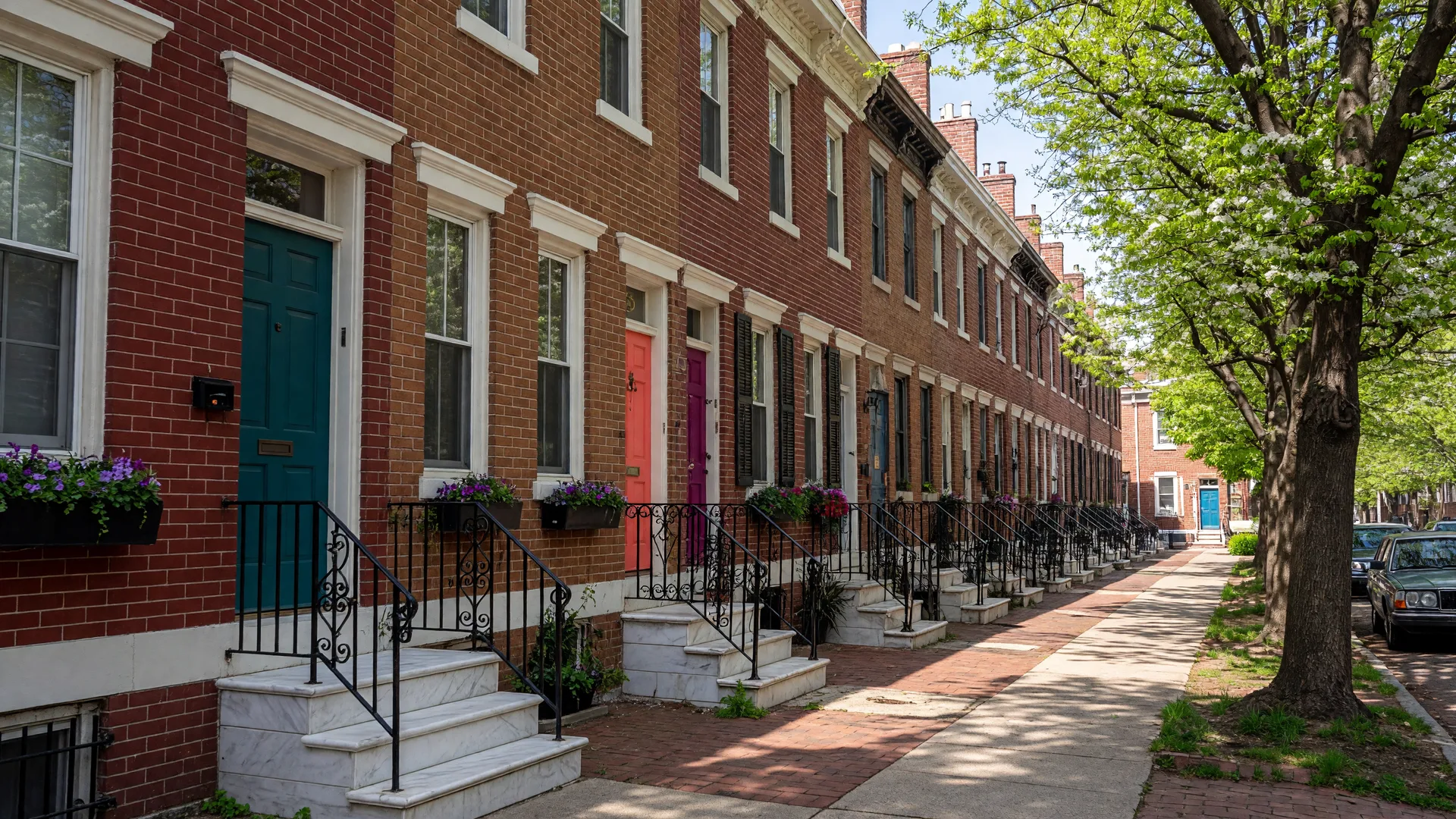
Queen Village is Philadelphia's oldest continuously occupied residential neighborhood, settled by Swedish immigrants in 1638 and named after Queen Christina of Sweden. The housing stock is dominated by beautifully preserved 19th century rowhomes featuring marble steps, wrought iron railings, decorative cornices, and colorful front doors. Many properties are listed on the National Register of Historic Places. Walking through these tree-lined streets feels like stepping back in time, yet you are minutes from modern urban amenities.
Vibrant Dining and Shopping Scene
Queen Village is a food lover's paradise. The neighborhood boasts Michelin-recognized restaurants including Royal Sushi & Izakaya (known for its omakase) and Famous 4th Street Delicatessen (a classic Jewish deli dating back to 1923). Other standout spots include Roxanne for creative small plates, Cry Baby Pasta, and Southwark for craft cocktails. The Italian Market, a short walk west on 9th Street, offers fresh produce, meats, cheeses, and authentic Italian groceries. Fourth Street's Fabric Row has been a hub for textiles and tailoring since the early 1900s.
Strong Community Feel
The Queen Village Neighbors Association is one of Philadelphia's most active civic organizations, organizing seasonal events, community clean-ups, garden tours, and the popular Queen Village Art Festival. The neighborhood's village-like atmosphere, with neighbors greeting each other on the street and gathering at local pubs, creates a sense of belonging that is rare in a big city. Headhouse Square hosts a seasonal farmers market and summer concerts.
Green Spaces and Waterfront Access
The neighborhood offers several parks including Mario Lanza Park (named after the famed tenor), Weccacoe Playground with its community garden, Shot Tower Park, and Bainbridge Green. The Delaware River waterfront trail is a short walk east, providing miles of running and biking paths with views of the Ben Franklin Bridge and the Philadelphia skyline.
The Cons You Should Know
Parking Is a Major Challenge
Like most dense Philadelphia neighborhoods, Queen Village has extremely limited parking. Street parking permits are available to residents, but spaces are scarce, especially on weekends when South Street visitors compete for spots. Homes with off-street parking or a garage command a significant price premium. If you own a car, budget for the cost and hassle of finding parking daily.
Historic Homes Need Work
While the historic rowhomes are beautiful, many need significant updates. Plumbing, electrical, and HVAC systems in properties over 100 years old often require replacement. The Neighborhood Conservation District, Philadelphia's first, oversees exterior changes to preserve historic character, meaning window replacements, door changes, and facade modifications may require association approval. Budget for renovation costs when buying an older home.
Noise from South Street Nightlife
While South Street's energy is a draw for many, its bars and clubs can bring noise to nearby blocks, particularly on weekends. Homes on side streets away from South Street are quieter, but if you are considering a property on or near South Street, factor in the nightlife activity. The neighborhood has noise ordinances, but enforcement varies.
Some Flood Zone Risk
Properties near the Delaware River are in designated flood zones, which means flood insurance may be required. Check FEMA flood maps before buying, as insurance costs can add $500 to $2,000 annually depending on the property's elevation and risk level.
Queen Village vs Other Philly Neighborhoods
Compared to Fitler Square, Queen Village offers more historic charm and a grittier, more authentic feel. Compared to Bella Vista, which shares the Italian Market area, Queen Village is slightly quieter and closer to the river. Rittenhouse Square offers more luxury shopping and high-end dining, but at significantly higher home prices. Queen Village provides excellent value for buyers who want historic character and urban convenience without Center City price tags.
Real Estate and Home Buying Considerations
The Queen Village real estate market features primarily three-story rowhomes from the 1860s to 1920s, with Colonial, Federal, and Italianate architecture. Prices range from condos starting around $230,000 to larger renovated historic homes approaching $2 million. The average home value sits around $593,000, with median sale prices near $650,000. Inventory is limited, and well-priced properties in good condition often attract multiple offers. Buyers should be pre-approved and ready to act quickly. For a deeper dive into the numbers, see our Queen Village Market Update 2026.
Who Is Queen Village Best For?
Queen Village is ideal for buyers who value historic character, walkability, and community atmosphere over modern suburban amenities. It suits young professionals who work in Center City or University City, families who want their kids to grow up in a diverse urban environment with good public schools, empty-nesters downsizing from suburban homes, and anyone who wants to experience authentic Philadelphia living. It may not be the best fit for car-dependent households, those who prefer new construction, or buyers on a very tight budget.
Ready to Find Your Queen Village Home?
Whether you are buying or selling, John Smart can help you navigate the Queen Village market with AI-powered insights and local expertise.
Common Questions
What is the Walk Score of Queen Village Philadelphia?
Queen Village has an exceptional Walk Score of 93 to 94, making it a Walker's Paradise where most daily errands and amenities are within walking distance.
Is Queen Village Philadelphia safe?
Queen Village is considered a safe and well-established Philadelphia neighborhood with an active civic association and community watch programs. As with any urban area, standard precautions are recommended, but crime rates here are lower than many surrounding neighborhoods.
What is Queen Village known for?
Queen Village is known for being one of Philadelphia's oldest continuously occupied neighborhoods, with historic 18th and 19th century rowhomes, proximity to South Street and the Italian Market, and a strong community feel through the Queen Village Neighbors Association.
Explore More Queen Village Resources
External Resources

Written by John Smart
AI-Certified Agent™ with eXp Realty | PA License RS348332
Serving Philadelphia, Montgomery, Bucks, Chester, Delaware and Berks Counties