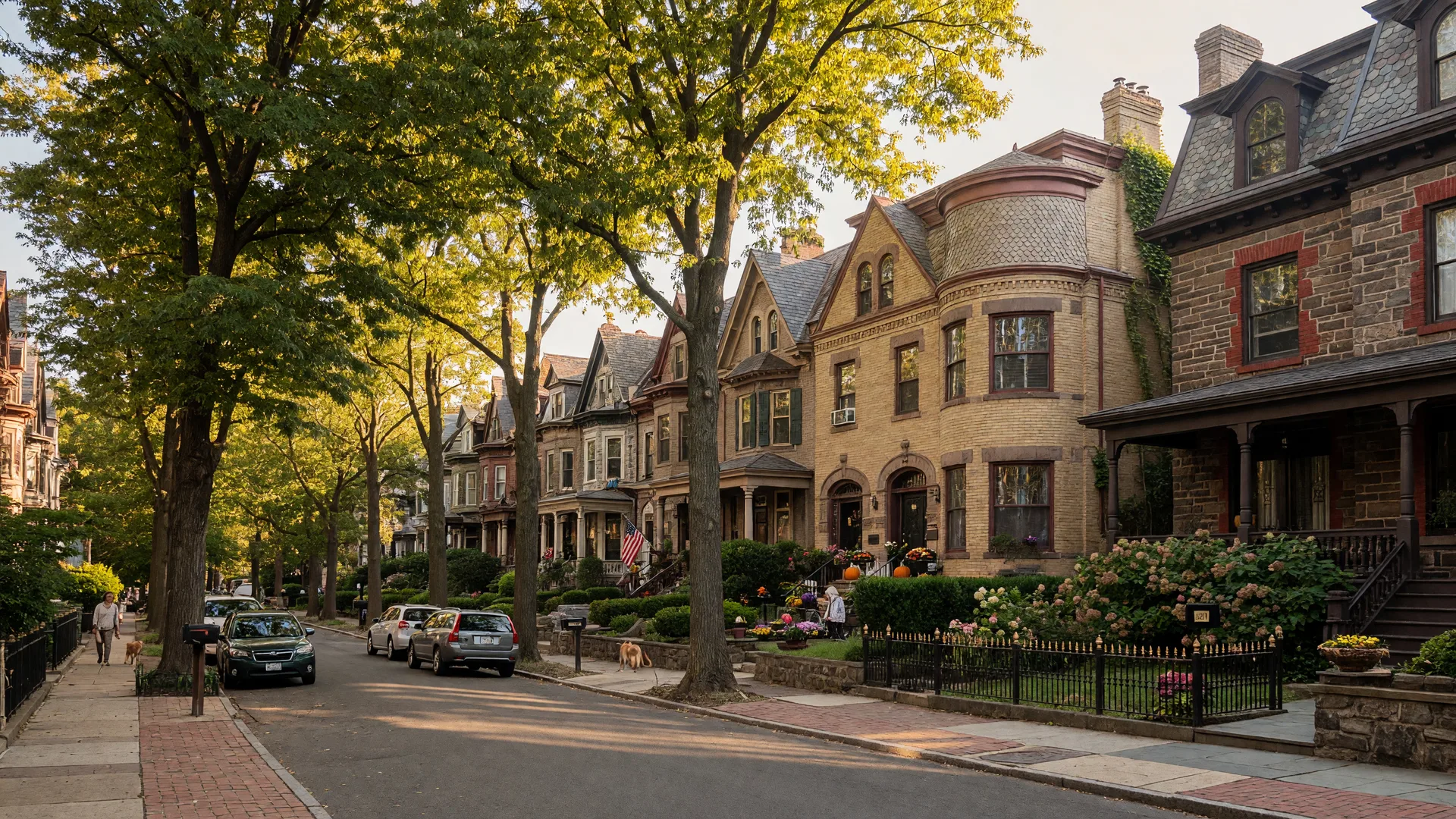
Chestnut Hill is one of Philadelphia's most distinctive neighborhoods, earning its nickname as the city's Garden District for its lush greenery, historic Victorian architecture, and vibrant village-like commercial core along Germantown Avenue. Perched at the highest point in Philadelphia, this Northwest Philadelphia neighborhood offers a unique blend of small-town charm and big-city access. Here is an honest, detailed look at the pros and cons of living in Chestnut Hill, drawing on deep local knowledge of the community.
Key Takeaways
- +Home to stunning Victorian architecture and the second-largest collection of Victorian homes in the United States, with many houses built from local Wissahickon schist.
- +Germantown Avenue offers an exceptional walkable shopping and dining district with independent boutiques, acclaimed restaurants, and year-round community events.
- +Two SEPTA Regional Rail lines provide direct service to Center City, though most car-free living requires strategic positioning near the rail stations.
- +Strong community identity with active civic associations, the Chestnut Hill Community Association, and beloved annual events including the Harry Potter Festival.
Victorian Architecture and Historic Charm
Chestnut Hill's architectural heritage is one of its strongest selling points. The neighborhood boasts the second-largest collection of Victorian homes in the United States, surpassed only by San Francisco. Walking through the residential streets feels like stepping into a bygone era, with houses showcasing Tudor Revival, Colonial Revival, Italianate, and Gothic Revival styles. Many homes are constructed from local Wissahickon schist, a distinctive stone that gives the neighborhood its characteristic earthy, warm aesthetic. The Chestnut Hill Historic District is listed on the National Register of Historic Places, ensuring that this architectural legacy is preserved for generations to come.
The tree-lined streets themselves are a major draw. Towering maples, oaks, and sycamores create natural canopies that make every season beautiful, from spring blossoms to brilliant fall foliage. The neighborhood's position at Philadelphia's highest point (over 400 feet above sea level) provides sweeping views and a noticeably cooler, breezier microclimate in summer. However, maintaining a historic home comes with real responsibilities. Older properties often need specialized contractors familiar with historic preservation standards, and renovations can be more expensive than in newer construction homes. Lead paint, outdated electrical systems, and roofs that need slate tile replacements are common considerations. Many buyers find that the charm and character of these homes more than compensate for the extra upkeep, but it is important to budget accordingly.
Germantown Avenue Shops and Dining
Germantown Avenue is the vibrant commercial spine of Chestnut Hill, lined with independent boutiques, art galleries, bookshops, cafes, and restaurants. Unlike many Philadelphia commercial corridors that have seen an influx of chain stores, Germantown Avenue has maintained its character as a destination for unique, locally-owned businesses. Artisans On the Avenue, Occasionette, and Greene Street offer distinctive home goods and gifts. Hideaway Music is a beloved local record store. The restaurant scene is equally impressive, with Chestnut Hill Brewing Company, Tavern on the Hill, El Limon, Iron Hill Brewery, and McNally's Tavern offering a range of dining experiences from casual to upscale. Baker Street Bread Co. is a neighborhood institution for fresh-baked goods and artisan breads.
The Chestnut Hill Farmers' Market operates every Saturday year-round in the SEPTA lot at Bethlehem Pike and Abbotsford Road, offering fresh produce, meats, prepared foods, and artisan goods from regional vendors. For a deeper dive into the neighborhood's food and shopping scene, see our companion guide on Best Restaurants, Shops, and Things to Do in Chestnut Hill. The downside of this charming commercial district is that Germantown Avenue can get congested on weekends, particularly during peak dining hours and special events. Parking in the commercial area is managed by a permit system and metered spaces, and finding a convenient spot near your destination sometimes requires circling the block.
Transit and Commute Options
Chestnut Hill is exceptionally well-served by public transit for a Philadelphia neighborhood of its character. Two SEPTA Regional Rail lines serve the neighborhood: the Chestnut Hill East Line (serving Chestnut Hill East station) and the Chestnut Hill West Line (serving Chestnut Hill West station). Both provide reliable service to Center City Philadelphia, with the ride taking approximately 35 to 45 minutes depending on the train and time of day. This makes Chestnut Hill a viable option for professionals who work in Center City but want a quieter, greener home environment. The SEPTA Route 23 bus runs along Germantown Avenue providing local service, and several other bus routes connect to other parts of the city.
For drivers, Chestnut Hill offers easier access to major roadways than many Center City neighborhoods. The neighborhood sits just west of Route 309 and a short drive from I-76 (the Schuylkill Expressway), making commutes to the suburbs and King of Prussia area manageable. Parking in the residential areas is much easier than in South Philadelphia or Center City, with many homes offering driveways or garages, though it is not universal. The trade-off is that Chestnut Hill is less walkable than neighborhoods closer to Center City, with a Walk Score of 65. While Germantown Avenue itself is very pedestrian-friendly, much of the residential area is spread out over hills and winding streets, and running daily errands without a car requires careful planning. For complete neighborhood information, visit our Chestnut Hill Community Guide.
Parks, Green Spaces, and Outdoor Life
This is where Chestnut Hill truly shines. The neighborhood is bordered by the Wissahickon Valley Park, a 2,000-acre urban forest that is part of Philadelphia's massive Fairmount Park system. The Wissahickon Trail offers over 50 miles of hiking, running, and mountain biking trails along the scenic Wissahickon Creek, with dramatic rock outcroppings, historic bridges, and stunning natural beauty that feels worlds away from the city. The Morris Arboretum & Gardens is a 92-acre botanical garden that is the official arboretum of the Commonwealth of Pennsylvania. With its formal gardens, historic trees, sculpture collection, and seasonal events, it is a treasure for Chestnut Hill residents. The Woodmere Art Museum showcases American art in a beautiful historic building, with a particular focus on Philadelphia artists and an expansive sculpture garden.
For everyday outdoor enjoyment, Pastorius Park offers a lovely green space with a pond, walking paths, and summer concert series. The Lorimer Park in nearby Abington provides additional trails and picnic areas. The Chestnut Hill Skyspace by artist James Turrell, located at the Chestnut Hill Friends Meeting, offers an extraordinary contemplative experience at sunrise and sunset. The abundance of green space is arguably the single biggest advantage of living in Chestnut Hill, providing residents with unparalleled access to nature within city limits. The trade-off is that some of the best trailheads and park access points require a short drive or a longer walk from many residential areas of the neighborhood.
Schools and Family Life
Chestnut Hill is a magnet for families, and the local educational options reflect the neighborhood's desirability. Public school options include Armstrong Elementary School (K-8) and Jenks Academy for the Arts & Sciences (grades 6-12), both of which serve the Chestnut Hill area. Lankenau Environmental Science Magnet High School offers a specialized environmental science curriculum for grades 9-12. The private school options are exceptional. Springside Chestnut Hill Academy is a prestigious Pre-K through 12 college preparatory school that merged two historic single-sex schools into a nationally-recognized coeducational institution. The Crefeld School offers a progressive, individualized approach for grades 7-12, and Chestnut Hill College, a Catholic liberal arts college founded by the Sisters of St. Joseph, adds a collegiate dimension to the neighborhood.
For families with younger children, the neighborhood offers multiple playgrounds and recreation options. The Pattison Park playground is a local favorite, and the Chestnut Hill Recreation Center offers sports programs and after-school activities. The family-oriented atmosphere is one of Chestnut Hill's defining characteristics, with many multi-generational families choosing to stay in the neighborhood long-term. The main consideration for families is that public school assignments depend on your specific address within the neighborhood, and some of the most desirable school options are private, requiring tuition. Families should research school catchment areas carefully before choosing a home.
Real Estate Market and Home Values
The Chestnut Hill real estate market has remained robust through 2026, reflecting the neighborhood's enduring appeal. The median home value in the 19118 ZIP code is approximately $834,000, with significant variation depending on property type, condition, and location. Victorian twins and stone colonials in the historic district command premium prices, while condos along the Germantown Avenue corridor offer more affordable entry points. The market has seen 1.7% year-over-year appreciation, with tight inventory supporting steady price growth. Homes in good condition typically sell within 30 to 40 days, and well-priced properties in prime locations often receive multiple offers. For detailed current market data, see our Chestnut Hill Real Estate Market Update 2026.
Housing options in Chestnut Hill are remarkably diverse. The neighborhood offers everything from modest twins and rowhomes near Germantown Avenue to grand detached estate homes near the Wissahickon. Condominiums and carriage houses provide options for downsizers and first-time buyers. The median year built is 1925, meaning most homes have historic bones and character. Renovated properties with modern kitchens, updated bathrooms, and efficient HVAC systems command the highest prices. The biggest challenge for buyers is limited inventory, as Chestnut Hill's desirability means homeowners tend to stay put longer than in many other Philadelphia neighborhoods. Getting pre-approved and working with an agent who specializes in the neighborhood is essential. If you are considering selling, visit our home valuation page for a free market analysis.
Community Identity and Events
Chestnut Hill has one of the strongest community identities of any Philadelphia neighborhood. The Chestnut Hill Community Association is an active civic organization that oversees development, organizes events, and publishes the award-winning Chestnut Hill Local newspaper, which has been covering neighborhood news since 1958. The neighborhood's signature event is the Chestnut Hill Harry Potter Festival, which draws thousands of visitors each October to celebrate the magical series with themed activities, costume parades, and special events along Germantown Avenue. The September Arts Fair showcases local and regional artists, and the Summer Concert Series at Pastorius Park provides free family entertainment.
The neighborhood's commercial district is managed by the Chestnut Hill Business District, which works to support local merchants and organize seasonal promotions and events that keep the avenue vibrant year-round. Holiday celebrations, sidewalk sales, and seasonal decorations create a continuous calendar of community activity. The sense of community is genuine and palpable, with neighbors knowing each other by name, local business owners greeting regular customers, and a shared pride in the neighborhood's unique character. For those who value a strong, engaged community with a distinct identity, Chestnut Hill delivers in ways that few other Philadelphia neighborhoods can match.
Common Questions
Is Chestnut Hill safe?
Chestnut Hill is considered one of the safest neighborhoods in Philadelphia, with a strong community watch presence and lower crime rates than many other parts of the city.
How far is Chestnut Hill from Center City Philadelphia?
Chestnut Hill is about 12 miles northwest of Center City, approximately a 35-45 minute train ride or 30-40 minute drive depending on traffic.
What is the cost of living in Chestnut Hill?
The cost of living in Chestnut Hill is higher than the Philadelphia average, with home prices significantly above the city median. However, it offers exceptional value compared to comparable suburban towns on the Main Line.
Is Chestnut Hill walkable without a car?
Germantown Avenue's commercial district is very walkable, and the train stations provide transit access. However, much of the residential area is hilly and spread out, so most residents rely on a car or combination of car and transit for daily life.
What is the best way to commute from Chestnut Hill to Center City?
The SEPTA Regional Rail (Chestnut Hill East or Chestnut Hill West lines) is the most popular and reliable option, with frequent service during peak hours and a comfortable 35-45 minute ride.
Explore More
External Resources
