Table of Contents
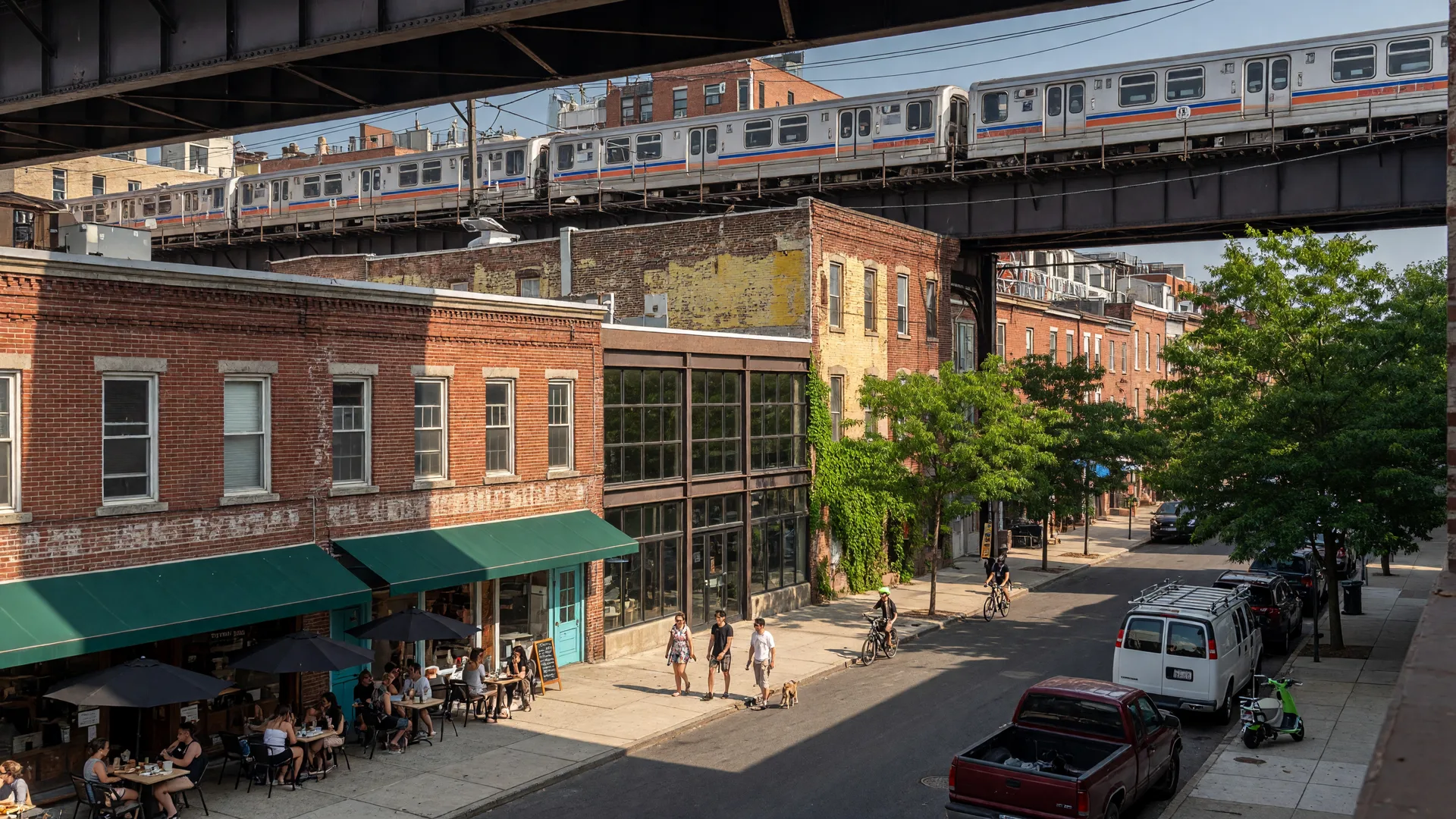
Fishtown is one of Philadelphia's most exciting and rapidly evolving neighborhoods. Located along the Delaware River in the Lower Northeast, this former working-class fishing and manufacturing district has transformed into a creative and culinary destination while holding onto its authentic blue-collar roots. The elevated SEPTA Market-Frankford Line rumbles along Frankford Avenue, the neighborhood's main commercial spine, connecting residents to Center City in about 15 minutes. The question on many buyers' minds is whether this vibrant riverside community is the right fit for their lifestyle and budget. Here is an honest, detailed look at the pros and cons of living in Fishtown in 2026.
Key Takeaways
- +Fishtown offers exceptional walkability with a Walk Score of 90, a nationally acclaimed dining scene, and the Delaware River Trail for recreation.
- +The neighborhood is served by the SEPTA Market-Frankford Line (Girard station), providing a 15-minute commute to Center City plus multiple bus routes.
- +Home prices range from entry-level rowhomes around $200,000 to luxury riverfront condos exceeding $700,000, with median prices around $400,000.
- +Fishtown offers a unique housing mix of converted warehouse lofts, new construction condos, and classic Philadelphia rowhomes that you won't find in most other neighborhoods.
- +The neighborhood is experiencing rapid change and rising prices, so buyers should act decisively and sellers should understand their property's unique positioning.
Why Fishtown? A Neighborhood Transformed
Fishtown's story is one of authentic urban reinvention. Originally settled as a Lenape fishing site and later a shad-fishing community after European settlement in the 1640s, the neighborhood earned its name from the Kensington shad fisheries that lined the Delaware River. For much of the 19th and 20th centuries, Fishtown was a working-class industrial district home to manufacturing plants, warehouses, and the families who staffed them.
The shift began in the early 2000s when artists and musicians drawn to Fishtown's affordable warehouse spaces and gritty character started a creative migration. By the 2010s, nationally recognized restaurants, craft breweries, and music venues followed. Today, Fishtown is one of Philadelphia's most sought-after addresses, celebrated by Forbes as one of America's hottest neighborhoods. The Frederick J. Rapp House at 1003 Frankford Avenue, built around 1785 and the oldest surviving residence, stands as a reminder of how far the neighborhood has come.
What makes Fishtown distinct from other Philly neighborhoods is its refusal to shed its past entirely. New condominiums rise alongside still-operating warehouses. Michelin-caliber restaurants neighbor corner bodegas. The elevated train tracks of the Market-Frankford Line, which many cities would bury, remain the neighborhood's defining architectural feature. For residents today, this blend of industrial heritage and modern urban energy is precisely the appeal.
The Pros of Living in Fishtown
- Exceptional Walk Score (90) and Dining Scene: Fishtown boasts a Walk Score of 90, putting everyday errands and entertainment within easy walking distance along Frankford Avenue and Girard Avenue. The neighborhood has become a culinary destination with nationally recognized spots including Frankford Hall (a German-style beer garden), Federal Donuts (famous for creative donuts and fried chicken), Suraya (stunning Lebanese cuisine in a beautiful garden setting), Wm. Mulherin's Sons, Kensington Quarters, and Fette Sau barbecue. This is a neighborhood where you can walk out your door and find world-class dining any night of the week.
- Excellent Transit Access: The SEPTA Market-Frankford Line (the "El") serves Fishtown through the Girard Avenue station, delivering riders to Center City in about 15 minutes. Multiple SEPTA bus routes along Frankford and Girard Avenues connect to other parts of the city. For drivers, I-95, the Delaware Avenue corridor, and the Ben Franklin Bridge provide quick regional access. This combination makes car-free living genuinely feasible for most residents.
- Unique Housing Stock: Fishtown offers a housing mix unlike any other Philadelphia neighborhood. You can buy a converted warehouse loft with exposed brick and soaring ceilings, a brand-new riverfront condo with modern amenities, a renovated classic brick rowhome, or a live-work artist space. This variety means buyers at different price points and with different aesthetic preferences can find something that fits.
- Delaware River Access: The Delaware River Trail provides scenic waterfront walking, running, and cycling paths with views of the Benjamin Franklin Bridge and passing boats. Penn Treaty Park, a historic riverside park at the foot of Beach Street, offers green space and river views. The ongoing development of the Delaware River waterfront continues to add recreational amenities.
- Creative and Music Scene: Fishtown is home to Johnny Brenda's, a beloved corner tavern and live music venue, plus multiple galleries, art spaces, and the Frankford Avenue Arts Corridor. The neighborhood's creative energy attracts musicians, artists, and makers who give the area a distinctive cultural identity. The annual Fishtown Fest and other community events keep the streets lively year-round.
- Strong Investment Potential: Fishtown has been one of Philadelphia's strongest real estate markets over the past 15 years, with significant appreciation driven by the neighborhood's cultural renaissance. Limited housing inventory in the most desirable blocks continues to support upward price pressure. For buyers looking for a home that builds equity, Fishtown has a strong track record.
The Cons of Living in Fishtown
- Rising Home Prices: The same renaissance that makes Fishtown desirable has pushed prices upward significantly. The days of bargain Fishtown rowhomes are largely over, especially for move-in ready properties. Median prices now range from the mid-$300,000s to over $450,000, and renovated homes with modern finishes command premiums. Buyers priced out of the hottest blocks may need to look at nearby Kensington or Port Richmond for more accessible options.
- Parking Challenges: Like most dense Philadelphia neighborhoods, parking in Fishtown can be a daily frustration. Many homes lack off-street parking, and street parking is competitive, particularly in the evening and on weekends near popular dining and nightlife spots. Residents with cars often budget for a parking pad or nearby garage space.
- El Train Noise: The elevated Market-Frankford Line is a defining feature of Fishtown, for better and for worse. Homes closest to the tracks experience regular train noise, including the rumbling and screeching of trains passing overhead. Buyers should spend time on the specific block of any property they are considering, especially during peak train hours, to assess noise levels for themselves.
- Uneven Revitalization: While parts of Fishtown are fully revitalized with polished restaurants and renovated homes, other blocks are still in transition. Some areas along Kensington Avenue and near the eastern industrial edges remain rough, with vacant properties and limited services. The quality of life can vary significantly from one block to the next.
- Limited Green Space: Despite the riverfront trail and Penn Treaty Park, Fishtown has relatively limited park space compared to other neighborhoods. Palmer Park provides community recreation space, but private yards are rare in rowhome and loft properties. Residents who want large private outdoor space may find the options limited.
- Insurance Costs: Some blocks in Fishtown, particularly along the floodplain near the Delaware River, may require flood insurance. Buyers should check flood zone designations for any property within a few blocks of the waterfront.
Fishtown Real Estate: What to Expect
Fishtown's real estate market in 2026 reflects its status as one of Philadelphia's most dynamic neighborhoods. The housing stock breaks down into three main categories.
Converted Warehouse Lofts: These industrial conversions offer the most distinctive living spaces in Fishtown: exposed brick walls, soaring ceilings, oversized windows, and open floor plans. Prices range from the low $300,000s for smaller units to over $600,000 for larger, well-located lofts. These properties appeal most strongly to buyers who prioritize character and space over traditional room layouts.
New Construction Condos: Several mid-rise condo buildings have been built along Front Street and near the Delaware River, offering modern finishes, amenities like fitness centers and roof decks, and in some cases, partial tax abatements. These units range from around $350,000 to over $700,000 for riverfront units with premium views. New construction appeals to buyers who want a move-in ready home with no renovation work needed.
Classic Philadelphia Rowhomes: The traditional Fishtown rowhome a two or three-story brick home on a narrow lot remains the most common property type. Prices range from around $200,000 for homes needing substantial renovation to $400,000 to $500,000 for fully updated properties with modern kitchens and bathrooms, finished basements, and outdoor space. Rowhomes represent the best value for buyers willing to take on renovation work.
For home sellers, Fishtown's market rewards properties that are priced realistically, presented well, and marketed to the right buyer demographic. Updated kitchens and bathrooms, good lighting, and off-street parking all add meaningful value. As an A.I. Certified Agent, I use predictive market analysis to help sellers understand exactly how their property compares to recent sales and what price point will attract the strongest offers.
Who Is Fishtown Best For?
Fishtown suits a specific kind of buyer: someone who values urban energy, walkability, and cultural vibrancy over suburban quiet or traditional neighborhood amenities. The neighborhood works exceptionally well for young professionals who work in Center City and want a short commute with a lively after-hours scene. It also appeals to creatives artists, musicians, designers, and makers who want to be part of a community with a strong cultural identity.
Empty-nesters downsizing from suburban homes are discovering Fishtown's converted loft spaces and new condos as an alternative to traditional retirement communities. The combination of walkability, dining, cultural access, and lower cost compared to Center City is a compelling package. For families with school-age children, the neighborhood offers Alexander Adaire School (K-8) and Penn Treaty School (middle school), plus access to nearby charter and private school options.
Buyers looking for a safe, predictable suburban environment may find Fishtown's urban character challenging. Those who want large private yards, quiet streets, and top-rated suburban school districts should look at neighborhoods in Montgomery County or Bucks County instead. But for the right buyer someone who wants to live where the city is most alive Fishtown offers a quality of life that is hard to find anywhere else in the Philadelphia region.
Get Fishtown Market Updates
Join 5,000+ subscribers receiving weekly neighborhood market reports and real estate insights.
Ready to explore Fishtown real estate? As an A.I. Certified Agent with deep local knowledge of this neighborhood, I can help you find the right property and price it correctly. Schedule a consultation with John Smart to get started, or check current listings on the Fishtown home search page.
Frequently Asked Questions About Fishtown
Is Fishtown Philadelphia safe?
Fishtown is a vibrant urban neighborhood that has undergone significant revitalization. Like any city neighborhood, safety varies by block. The main commercial corridors like Frankford Avenue and Girard Avenue have high foot traffic and active street life. Standard urban precautions are recommended, particularly at night and on quieter residential streets.
What is Fishtown known for?
Fishtown is known for its nationally acclaimed dining scene, craft breweries, live music venues, and converted warehouse lofts. It is a creative hub along the Delaware River with landmarks like Frankford Hall, Johnny Brenda's, Federal Donuts, and Penn Treaty Park. The elevated SEPTA Market-Frankford Line (the "El") runs through the neighborhood's heart.
How walkable is Fishtown?
Fishtown has a Walk Score of 90, making it a Walker's Paradise. Most errands, dining, and entertainment are easily walkable along Frankford Avenue and Girard Avenue. The neighborhood is also highly bikeable, with the Delaware River Trail providing scenic waterfront access for cyclists and pedestrians.
What is the median home price in Fishtown?
Fishtown median home prices typically range from the mid-$300,000s to around $450,000, depending on the property type and location. Classic rowhomes generally start around $200,000 to $350,000 for fixer-uppers, while renovated properties and new condos range from $400,000 to over $700,000 for riverfront units.
How do you get to Center City from Fishtown?
The SEPTA Market-Frankford Line (the "El") provides direct subway service from the Girard Avenue station to Center City in about 15 minutes. Multiple SEPTA bus routes along Frankford Avenue and Girard Avenue also connect to Center City and surrounding neighborhoods. Driving via I-95, Delaware Avenue, or Front Street takes roughly 10 to 15 minutes depending on traffic.
Explore More Fishtown Resources
External Resources

Written by John Smart
AI-Certified Agent with eXp Realty | PA License RS348332
Serving Philadelphia, Montgomery, Bucks, Chester, Delaware and Berks Counties