Table of Contents
Chestnut Hill offers some of the most distinctive and architecturally significant housing stock in the entire Philadelphia region. From Victorian twins clad in Wissahickon schist to Tudor Revival manors tucked along winding hillside streets, the neighborhood's homes are as individual as the people who live in them. Whether you are buying your first home in the Garden District or selling a historic property you have lovingly maintained for decades, understanding Chestnut Hill's unique real estate dynamics is essential. This guide covers the housing stock, pricing tiers, buying strategies, seller preparation, and negotiation tactics that matter in this remarkable neighborhood.
Key Takeaways
- +Chestnut Hill offers Victorian twins, stone colonials, Tudor Revival homes, condos, carriage houses, and luxury estates, with the second-largest Victorian home collection in the US.
- +Pricing ranges from $250,000 entry-level condos to $2 million plus historic estate properties, with median home values around $834,000 in the 19118 ZIP code.
- +Well-priced homes typically sell within 30 to 40 days. Desirable properties in prime locations often receive multiple offers, making pre-approval essential for buyers.
- +Historic homes require specialized contractors for slate roofs, old electrical systems, and preservation standards, which should factor into any buyer budget.
Understanding Chestnut Hill Housing Stock
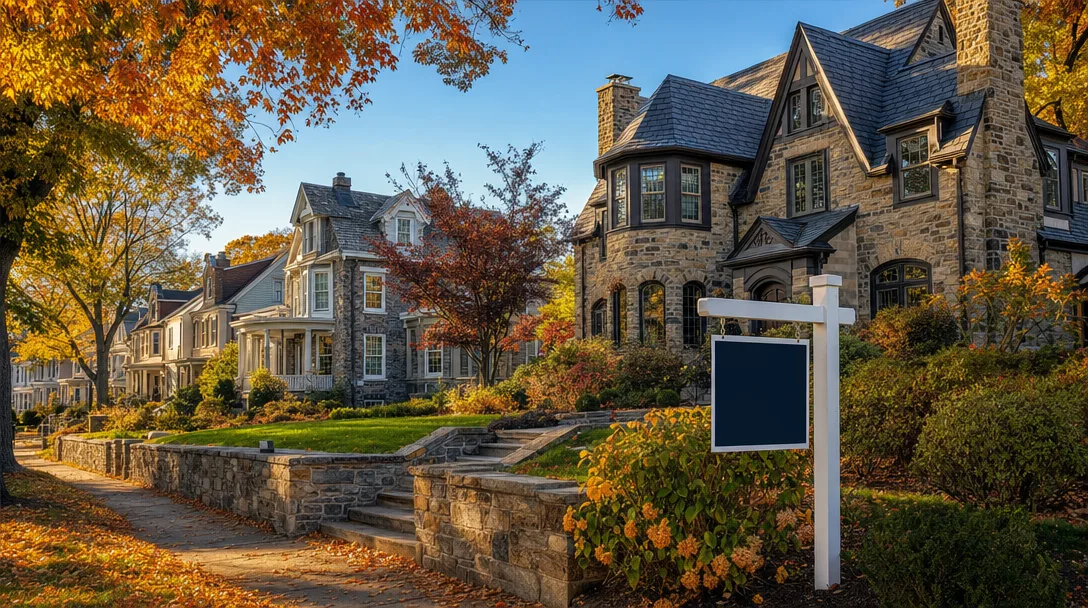
Chestnut Hill's real estate market is defined by its extraordinary architectural diversity. The neighborhood contains the second-largest collection of Victorian homes in the United States, surpassed only by San Francisco. The median year built for homes in Chestnut Hill is 1925, meaning most properties predate World War II and carry the craftsmanship and character of an earlier era. The dominant building material is Wissahickon schist, a locally quarried stone that gives Chestnut Hill's homes their characteristic warm, earthy appearance with subtle variations in gray, brown, and blue tones. Many homes in the Chestnut Hill Historic District, listed on the National Register of Historic Places, feature this distinctive stonework, and it is a major factor in the neighborhood's visual appeal and property values.
The housing market is also shaped by the neighborhood's geography. Chestnut Hill sits at Philadelphia's highest elevation, over 400 feet above sea level, with hills sloping down toward the Wissahickon Valley. Homes on the higher elevations and those with valley views command premium prices. Properties bordering the Wissahickon Valley Park are particularly desirable, offering direct trail access and protected green space as a backyard amenity. The neighborhood's historic district designation adds both prestige and regulation: exterior alterations to properties in the Historic District must be reviewed by the Chestnut Hill Historical Society, which can affect renovation timelines and costs. For a comprehensive overview of the neighborhood, visit our Chestnut Hill Community Guide.
Victorian Twins and Stone Colonials
The most iconic and sought-after home type in Chestnut Hill is the Victorian twin, a paired home where two residences share a common wall while each maintains its own entrance, yard, and character. These homes typically feature three to four bedrooms, 1,500 to 2,500 square feet of living space, high ceilings, large windows, hardwood floors, wrap-around porches, and elaborate millwork. Many have been updated with modern kitchens and bathrooms while preserving their original architectural details. Stone colonials are another hallmark of Chestnut Hill real estate. These stately homes are built entirely or primarily from Wissahickon schist and often sit on larger lots with mature landscaping, driveways, and garages. They typically offer 2,500 to 4,000 square feet of living space and attract buyers seeking a more traditional single-family feel.
Tudor Revival homes, with their steeply pitched roofs, decorative half-timbering, and brick or stone facades, are common in Chestnut Hill's higher-end sections. Many were designed by prominent Philadelphia architects of the early 20th century and are sited on generous lots with sweeping lawns and garden plantings. These homes are the most expensive category of Chestnut Hill real estate and often require significant maintenance budgets. For more detailed market data on these property types, see our Chestnut Hill Real Estate Market Update 2026 for current pricing trends, days on market, and inventory levels.
Condos, Carriage Houses, and Entry-Level Options
Not every home in Chestnut Hill requires a seven-figure budget. The neighborhood offers several ways to enter the market at lower price points. Condominiums along the Germantown Avenue corridor provide an affordable entry point, with one and two-bedroom units typically ranging from $250,000 to $400,000. These are popular with first-time buyers, downsizers, and investors. Many of these condo buildings are converted Victorian homes or carriage houses, offering historic character with modern amenities like central air, updated kitchens, and shared outdoor spaces. Monthly HOA fees cover maintenance, insurance, and common area upkeep, which is a consideration for budget-conscious buyers.
Carriage houses and carriage house conversions are a unique Chestnut Hill niche. Originally built as stable and coach houses behind the large estates, these structures have been converted into charming, compact homes that offer an affordable alternative with abundant character. They typically have one to two bedrooms, often with exposed stone walls, loft spaces, and private outdoor areas. Small twins and rowhomes near the neighborhood's edges, particularly along the Mt. Airy border, also offer more modest pricing. These homes may be smaller and closer to busier streets, but they provide Chestnut Hill access, school assignment, and community benefits at a more accessible price point. For buyers on any budget, browse available Chestnut Hill listings to see what fits your needs.
Pricing Tiers and Market Segments
The Chestnut Hill real estate market can be understood in several distinct pricing tiers. The entry-level market (condos and smaller twins) generally ranges from $250,000 to $450,000 and attracts first-time buyers, young professionals, and investors. The mid-market (renovated twins, colonials, and smaller single-family homes) ranges from $500,000 to $800,000 and sees the most balanced buyer pool, including families and relocating professionals. The premium market (Tudor Revivals, estate homes, historic properties on large lots) ranges from $900,000 to $1.5 million. The luxury market (grand estates, architect-designed homes, properties with Wissahickon views) extends from $1.5 million to $3 million plus.
The median home value in the 19118 ZIP code is approximately $834,000 as of mid-2026, reflecting the neighborhood's upscale positioning within the Philadelphia market. Price per square foot varies significantly by property type and condition: renovated move-in ready twins command $300 to $400 per square foot, while fixer-uppers may sell for $200 to $250 per square foot. Condos and smaller homes typically trade at slightly higher per-foot prices due to their smaller total footprint. The tight inventory characteristic of Chestnut Hill supports steady appreciation, with year-over-year gains of approximately 1.7 percent. Buyers should expect competition for well-priced, well-maintained properties in desirable locations, and sellers can anticipate strong interest for homes that are priced realistically and presented well.
Buying in Chestnut Hill: Strategy and Tips
Buying a home in Chestnut Hill requires preparation and a clear strategy. The neighborhood's desirability means that the best properties rarely linger, and multiple offers are common on well-priced homes. The most important step is getting pre-approved for a mortgage before you start looking seriously. Sellers and their agents in Chestnut Hill take pre-approved buyers much more seriously, and in a competitive situation, financing certainty can be the deciding factor. Work with a lender who understands the unique aspects of Chestnut Hill properties, including the sometimes higher inspection contingencies that historic homes require. An experienced local agent is equally important. Chestnut Hill's real estate is nuanced: knowing which streets are walkable to the train, understanding the historic district review process, and having relationships with local inspectors who know historic homes are all significant advantages.
When evaluating properties, pay close attention to the major systems that define Chestnut Hill home costs. Slate roofs are beautiful and durable but expensive to repair or replace. Aging electrical systems are common in pre-war homes and may need upgrading for modern usage. Cast iron waste pipes and galvanized water supply lines may need replacement in older properties. Window replacement in historic districts must meet preservation guidelines, affecting cost and timeline. A thorough home inspection by someone experienced with Chestnut Hill's construction methods is essential. For those considering a purchase, the Chestnut Hill Historical Society and the Chestnut Hill Community Association are valuable resources for understanding property history, zoning, and neighborhood plans. Understanding Chestnut Hill's unique housing stock and its trade-offs will help you make a confident, informed decision. For a broader perspective on neighborhood living, read The Pros and Cons of Living in Chestnut Hill.
Selling in Chestnut Hill: What to Expect
For sellers, Chestnut Hill offers a strong market, but preparation is critical. The buyers who are drawn to Chestnut Hill are often sophisticated, well-researched, and discerning. They are looking for a home that respects its historic character while offering modern livability. To maximize your sale price, focus on improvements that respect the home's architectural integrity. A renovated kitchen that uses period-appropriate materials, updated bathrooms that maintain the home's original character, and mechanical systems that are modern and efficient all add significant value. Curb appeal matters enormously in Chestnut Hill: the tree-lined streets and historic architecture set high expectations, and a well-maintained exterior with attractive landscaping sends a powerful signal to buyers.
Pricing strategy in Chestnut Hill requires careful analysis. Overpricing can leave a property languishing on the market, and the longer a listing sits, the more buyers wonder what is wrong with it. Underpricing to generate a bidding war is a legitimate strategy in a strong market, but it carries risk if the bidding does not materialize. The most reliable approach is to price at or very near market value based on recent comparable sales, condition-adjusted, and let the quality of the home drive the outcome. Well-priced, well-presented Chestnut Hill homes typically sell within 30 to 40 days. Working with an agent who has deep Chestnut Hill experience and can accurately assess your home's position in the market is invaluable. Get a free, no-obligation home valuation to understand your property's current market worth.
Negotiation Tips for Chestnut Hill Real Estate
Negotiation in Chestnut Hill requires a different approach than in a more standardized suburban market. Each property is genuinely unique, which means comparable sales are guidelines rather than rules, and the factors that drive value vary from home to home. For buyers, the most effective approach is to lead with your strongest offer when you find the right property. The market is competitive enough that offering low in hopes of negotiating up often means losing the home to a buyer who makes a clean, well-priced offer from the start. Inspection contingencies should be realistic: expect to find issues in a historic home, and focus negotiations on major defects rather than cosmetic preferences.
For sellers, the strongest negotiating position is a well-prepared home priced correctly from the start. Multiple-offer situations are common for desirable properties, and handling them transparently and professionally builds goodwill with all parties. Be prepared to negotiate on closing timeline, inspection credits, and contingency terms, all of which can make a difference to buyers even if the price is fixed. A seller who has addressed major issues in advance and priced with realistic expectations will find the negotiation process straightforward. For more on the neighborhood's broader appeal, see our guide to Best Restaurants, Shops, and Things to Do in Chestnut Hill and the Market Update 2026 for actionable data.
Working with an Agent Who Knows Chestnut Hill
Whether you are buying or selling in Chestnut Hill, working with a real estate agent who has deep, specific knowledge of the neighborhood makes a tangible difference. Chestnut Hill is not a standard Philadelphia market: the historic district regulations, the unique construction methods, the school catchment boundaries, and the premium placed on walkability to the train all require local expertise. An agent who has sold multiple homes in Chestnut Hill will know which inspectors specialize in historic properties, which contractors understand Wissahickon schist masonry, and how to value a home with a slate roof versus asphalt shingles. They will also have relationships with other Chestnut Hill agents, which can make the difference in a competitive transaction.
As an AI-Certified Agent with eXp Realty serving Chestnut Hill and all of Philadelphia's Northwest neighborhoods, I bring both local knowledge and data-driven market analysis to every transaction. Whether you are looking for your first Chestnut Hill condominium, preparing to sell a historic estate, or navigating the unique considerations of a family relocation, I can help you achieve your goals. Start with a free home valuation if you are considering selling, or reach out to discuss your buying criteria. Chestnut Hill real estate is as distinctive as the neighborhood itself, and having the right guidance makes all the difference.
Common Questions
What types of homes are in Chestnut Hill?
Chestnut Hill offers Victorian twins, stone colonials, Tudor Revival homes, condos along Germantown Avenue, carriage houses, and luxury estate properties, with most built from local Wissahickon schist before 1940.
What is the price range for homes in Chestnut Hill?
Entry-level condos start around $250,000 to $400,000. Victorian twins and colonials range from $500,000 to $850,000. Premium estate and historic properties range from $900,000 to $2 million plus.
How long does it take to sell a home in Chestnut Hill?
Well-priced homes in good condition typically sell within 30 to 40 days. Multiple offers are common for desirable properties, while entry-level condos sometimes take 60 to 90 days.
What should I know before buying a historic home in Chestnut Hill?
Historic homes require specialized contractors for slate roofs, aging electrical systems, and preservation standards compliance. Budget accordingly for maintenance, but the character and craftsmanship are unmatched.
What makes Chestnut Hill real estate unique?
Chestnut Hill has the second-largest collection of Victorian homes in the US, homes built from local Wissahickon schist, and a National Register Historic District that protects the architectural legacy.
Explore More Chestnut Hill Resources
Chestnut Hill Community Guide
View moreChestnut Hill Real Estate Market Update 2026
View moreThe Pros and Cons of Living in Chestnut Hill
View moreBest Restaurants, Shops, and Things to Do in Chestnut Hill
View moreGet a Free Chestnut Hill Home Valuation
View moreMore Philadelphia Neighborhood Guides
View moreExternal Resources