Table of Contents
Chestnut Hill offers a distinctive daily lifestyle that blends village charisma with city convenience, but the walkability and transportation picture is more nuanced than many newcomers expect. Perched at the highest point in Philadelphia, this historic Northwest Philadelphia neighborhood rewards strategic positioning and a balanced approach to getting around. Whether you are considering a move or simply curious about daily life in the Garden District, this guide walks through Chestnut Hill's walk scores, safety record, transit options, and the rhythms of everyday life in one of Philadelphia's most distinctive neighborhoods.
Key Takeaways
- +Chestnut Hill has a Walk Score of 65: Germantown Avenue is very pedestrian-friendly, but most residential areas require a car or strategic transit use.
- +Two SEPTA Regional Rail lines (Chestnut Hill East and Chestnut Hill West) provide direct service to Center City Philadelphia in 35-45 minutes.
- +Chestnut Hill is one of the safest Philadelphia neighborhoods, with crime rates well below the city average and active community watch programs.
- +Daily life centers on the Saturday Farmers Market, Germantown Avenue shops and dining, and nearby parks offering a village-like atmosphere within the city.
Walk Score and Pedestrian Life
Chestnut Hill earns a Walk Score of 65, ranking it as "somewhat walkable" on the Walk Score scale. This places it significantly below Center City neighborhoods like Rittenhouse Square (Walk Score 97) or Old City (Walk Score 94), but well above many suburban communities. The number tells an important story: Chestnut Hill offers a genuinely walkable core along Germantown Avenue, while its residential side streets spread over hills and winding roads require more planning for foot-based errands. The Chestnut Hill Walk Score page breaks down walking distances to various amenities and can help prospective residents evaluate specific locations.
The neighborhood benefits from a notably high Bike Score of 73, reflecting the relatively bike-friendly nature of Germantown Avenue and the availability of trails in adjacent parks. The hilly terrain is the main challenge for casual cyclists, but dedicated riders find the routes rewarding. The Transit Score of 62 reflects the presence of two SEPTA Regional Rail stations and several bus lines, though weekend and evening service frequency can be a limitation for households that rely entirely on public transit. The key insight for prospective residents is to look closely at the specific address: a home within a five-minute walk of Germantown Avenue and one of the train stations provides a very different daily experience from a home deep in the residential hills near the Wissahickon.
Germantown Avenue Commercial Corridor
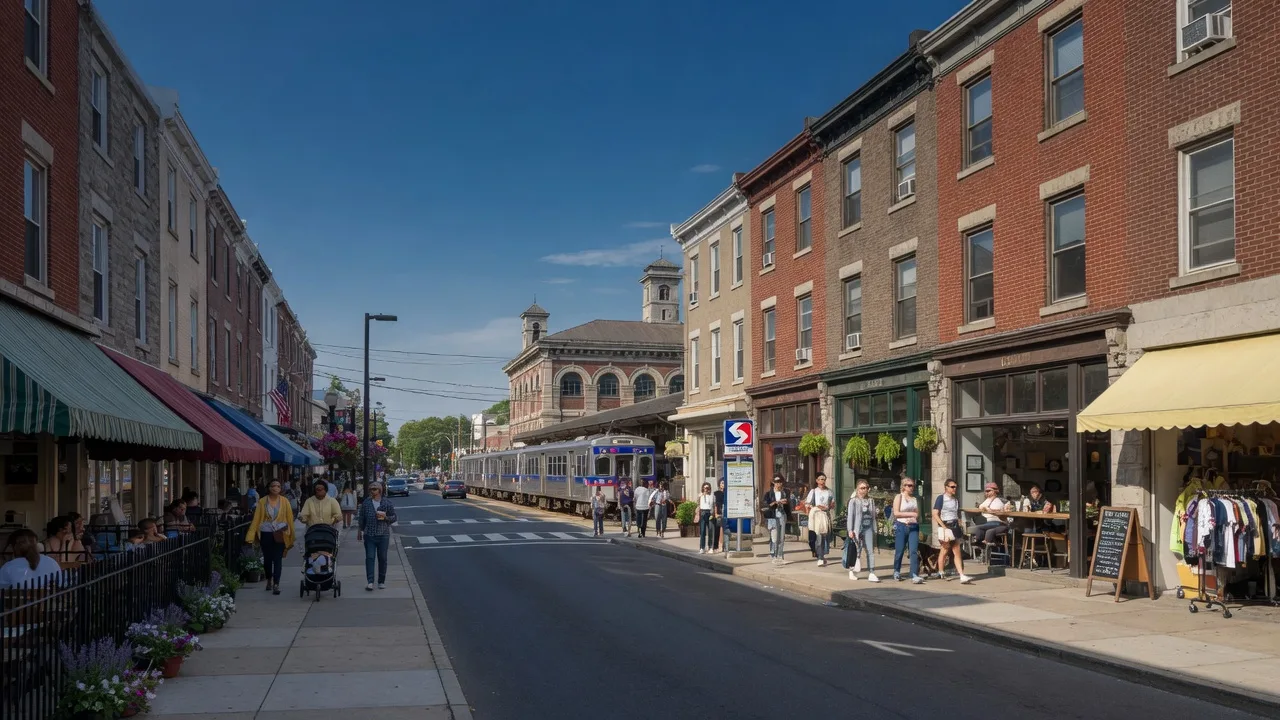
The heart of daily life in Chestnut Hill is Germantown Avenue, the neighborhood's historic commercial spine. The avenue runs through the neighborhood from Chestnut Hill's southern edge near Mt. Airy through its northern end at the city line with Montgomery County. The commercial core, concentrated between Willow Grove Avenue and Bethlehem Pike, offers a remarkably high concentration of independent businesses. Daily errands are possible on foot for those living within a few blocks of the avenue: you can visit the post office, pick up dry cleaning, buy groceries at the Chestnut Hill Market or Weavers Way Co-op, grab a coffee at Land Health or Chestnut Hill Coffee Company, and dine at any of a dozen restaurants all within a compact walkable area.
The Chestnut Hill Business District organization maintains the corridor's charm with seasonal decorations, public art installations, and coordinated marketing that keeps the avenue vibrant. Sidewalk widths are generous by Philadelphia standards, and many restaurants offer outdoor seating that enlivens the streetscape. The avenue is also the site of the neighborhood's major community events, from the Harry Potter Festival in October to the sidewalk sales and holiday strolls that punctuate the year. The avenue's walkability is arguably Chestnut Hill's single greatest lifestyle asset, and it is a primary reason why homes within a short walk of Germantown Avenue command a premium in the real estate market. For a complete guide to the dining and shopping scene, see our companion post on Best Restaurants, Shops, and Things to Do in Chestnut Hill.
SEPTA Regional Rail Access
Chestnut Hill is one of the few Philadelphia neighborhoods served by two SEPTA Regional Rail lines. The Chestnut Hill East Line operates from SEPTA's Market East Station (Jefferson Station), with its Chestnut Hill terminus at Chestnut Hill East Station on Bethlehem Pike and East Evergreen Avenue. The Chestnut Hill West Line operates from Suburban Station, with its northern terminus at Chestnut Hill West Station on Germantown Avenue near Southampton Avenue. Both lines provide direct, one-seat rides to Center City with travel times of approximately 35 to 45 minutes, depending on the specific train and time of day. During peak commuting hours, trains run roughly every 30 minutes on each line, giving combined headways of about 15 minutes for the neighborhood as a whole.
The two stations serve different parts of the neighborhood. Chestnut Hill East Station anchors the eastern and northeastern sections, while Chestnut Hill West Station serves the western side near the Wissahickon Valley Park. Both stations are within walking distance of Germantown Avenue, and each has limited parking for commuters who drive to the train. Off-peak and weekend service is less frequent, with hourly headways typical outside of rush periods. The SEPTA Regional Rail Schedules page provides current timetables for both lines. For many Chestnut Hill commuters, the train is the preferred option over driving, especially for workers in Center City or University City, where parking costs make driving less attractive.
Commuting by Car
For residents who drive, Chestnut Hill offers better car access than many Philadelphia neighborhoods. The neighborhood sits just west of Route 309, providing a direct route north to the Pennsylvania Turnpike and south toward the city. A short drive west leads to I-76 (the Schuylkill Expressway), connecting to Center City, University City, King of Prussia, and the Main Line suburbs. Commuting to Center City by car typically takes 25 to 40 minutes depending on traffic, with the Schuylkill Expressway being the main bottleneck during peak hours. The neighborhood's position at Philadelphia's northern edge makes it particularly convenient for commuters who work in Montgomery County or the suburban employment centers around King of Prussia, Plymouth Meeting, and Blue Bell.
Parking in Chestnut Hill is notably easier than in Center City or South Philadelphia. Many homes offer driveways or garages, particularly the single-family homes and twins in the historic district. On-street parking in residential areas is generally available, though it can be tight near the commercial corridor and apartment buildings. The commercial district along Germantown Avenue has metered street parking and several small parking lots. For residents living within a few blocks of the avenue, driving to the grocery store or other errands is seldom necessary, but for those in the hillier sections, a car is essential for most daily errands. The balance between driving and walking is one of the lifestyle trade-offs that prospective residents should weigh carefully.
Safety and Crime Statistics
Chestnut Hill consistently ranks as one of the safest neighborhoods in Philadelphia. Crime rates in the 19118 ZIP code are significantly lower than the Philadelphia city average for both violent and property crimes. The neighborhood's strong community watch infrastructure is a key factor in maintaining safety. The Chestnut Hill Community Association coordinates block captain programs, and the 14th Police District maintains a visible presence. The neighborhood's physical layout also contributes to safety: the tree-lined streets, historic character, and active pedestrian life along Germantown Avenue create natural surveillance that discourages criminal activity.
Residents consistently report feeling safe walking alone in the neighborhood during daylight and evening hours, particularly along Germantown Avenue and in the residential areas near the commercial corridor. As with any city neighborhood, basic precautions are advisable: locking vehicles, securing homes, and being aware of your surroundings, especially after dark in less-trafficked areas. The hillside streets and park edges are quieter and deserve the same awareness as any urban residential area. For families, the safety reputation is a major draw, and the neighborhood's low crime rates are frequently cited in resident surveys as a top reason for choosing Chestnut Hill. For a broader perspective on neighborhood living, read The Pros and Cons of Living in Chestnut Hill.
Daily Life and Errands
Everyday life in Chestnut Hill has a distinctive rhythm that many residents describe as feeling like a small town within a big city. The week typically centers on the Chestnut Hill Farmers Market, held every Saturday year-round from 9 AM to 1 PM at the SEPTA lot on Bethlehem Pike and Abbotsford Road. The market is a true community gathering that goes beyond grocery shopping, with local musicians, cooking demonstrations, and neighbors catching up over coffee and breakfast from market vendors. For mid-week groceries, the Weavers Way Co-op at 651 Carpenter Lane provides organic and locally sourced provisions, while Chestnut Hill Market and Acme Markets in the shopping center at Bethlehem Pike offer full-service grocery shopping.
Pharmacy needs are met by CVS and Rite Aid on Germantown Avenue. Banking is available at several branches including Wells Fargo and PNC. The Chestnut Hill Post Office at 7818 Germantown Avenue handles mailing and shipping needs. For medical care, the Chestnut Hill Hospital at 8835 Germantown Avenue provides emergency services, and numerous physician offices and specialists are located in the neighborhood. The Saturday farmers market creates a weekly ritual that shapes community life, and many residents plan their weekend schedules around it. The village-like quality of daily errands along Germantown Avenue, where you can walk to multiple destinations without getting in a car, is one of the neighborhood's most cherished qualities. For more on what it is like to live here full time, explore our Chestnut Hill Schools, Parks, and Community Life guide.
Neighborhood Demographics
Chestnut Hill's population reflects its appeal across a broad range of life stages. The neighborhood has a notably high concentration of families with children, drawn by the schools and parks. Empty nesters and retirees are also well represented, often moving from larger suburban homes to Chestnut Hill's walkable condos and twins. The 19118 ZIP code has a median age of approximately 38 years, slightly above the Philadelphia city median, reflecting the family and retiree presence. Educational attainment is high, with a significant majority of adults holding bachelor's degrees or higher, consistent with the neighborhood's professional and academic character.
The neighborhood is predominantly owner-occupied, with homeownership rates well above the Philadelphia city average. This stability contributes to the strong community identity and long-term resident investment in neighborhood quality. Diversity in Chestnut Hill has increased steadily over recent decades, with the neighborhood attracting residents from a variety of backgrounds drawn by the excellent schools, safe streets, and community amenities. The professional mix includes healthcare workers from Chestnut Hill Hospital and area medical centers, educators from local schools and universities, legal and financial professionals who commute to Center City, and a creative community of artists and designers drawn to the neighborhood's historic character and independent spirit. For current real estate trends affecting the neighborhood, see our Chestnut Hill Real Estate Market Update 2026.
Common Questions
What is the Walk Score for Chestnut Hill?
Chestnut Hill has a Walk Score of 65, making it somewhat walkable. Germantown Avenue offers excellent pedestrian amenities, but the hilly residential areas require strategic planning for car-free living.
What SEPTA trains serve Chestnut Hill?
Two SEPTA Regional Rail lines serve Chestnut Hill: the Chestnut Hill East Line (serving Chestnut Hill East Station) and the Chestnut Hill West Line (serving Chestnut Hill West Station). Both lines provide service to Center City in 35-45 minutes.
Is Chestnut Hill a safe neighborhood?
Yes, Chestnut Hill is one of Philadelphia's safest neighborhoods, with crime rates well below the city average and active community watch programs coordinated through the Chestnut Hill Community Association.
Can you live in Chestnut Hill without a car?
It is possible but takes planning. Living near Germantown Avenue and a SEPTA station makes car-free life feasible. The hilly terrain and spread-out residential layout make a car convenient for most residents.
What is the difference between Chestnut Hill East and West lines?
The East Line originates at Jefferson Station (Market East) and serves the eastern side of the neighborhood. The West Line originates at Suburban Station and serves the western side. Both connect to Center City in similar travel times.
Explore More Chestnut Hill Resources
Chestnut Hill Community Guide
View moreThe Pros and Cons of Living in Chestnut Hill
View moreChestnut Hill Real Estate Market Update 2026
View moreChestnut Hill Schools, Parks, and Community Life
View moreGet Your Chestnut Hill Home Value Today
View moreMore Philadelphia Neighborhood Guides
View moreExternal Resources
